
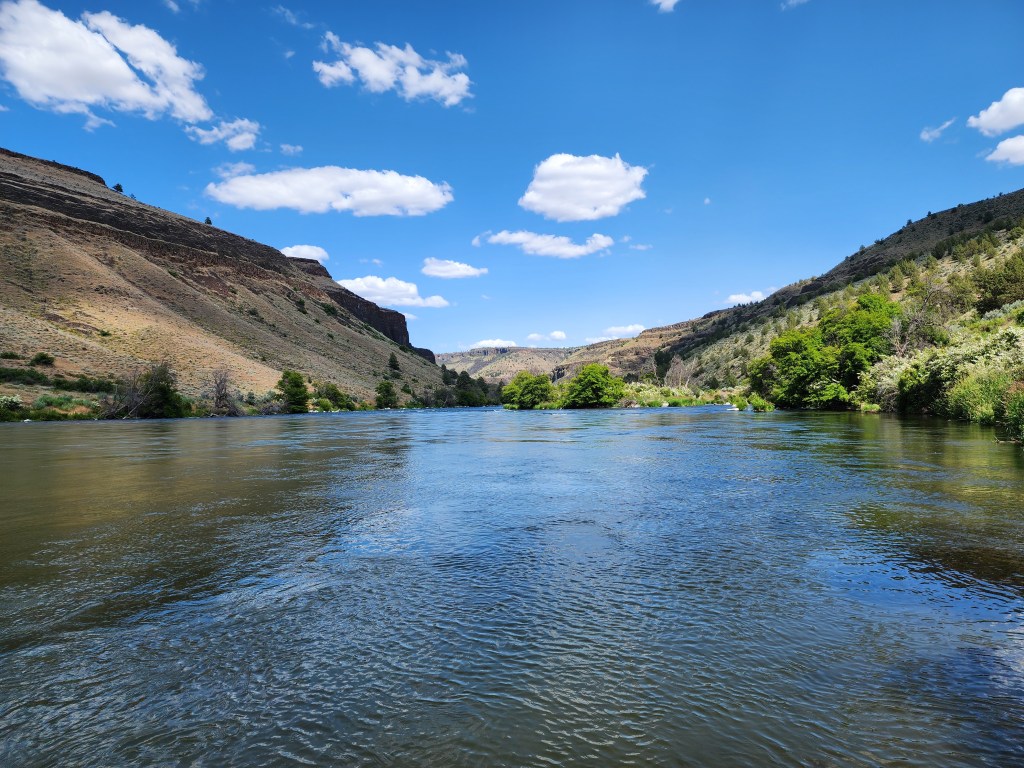
I’m back from three days of camping and fishing on the Lower Deschutes. What a beautiful river holding wonderful, healthy fish. The only problem I saw is that it is being loved to death. So many people. But we fished early and late in the day to avoid most of the crowds and fished the tough to access spots to find fish that were not leader shy from weeks of extreme angling pressure.
While I was away the Bulletin ran a column I wrote on a couple of water bills. If you don’t have a subscription see the text below. Also, ODFW has released their forecast for 2025 salmon and steelhead returns in the Columbia Basin, which includes the Deschutes. The outlook for summer steelhead is “very poor”. These forecasts have a mixed history of accuracy but ODFW is preparing for the potential of angling restrictions.
Bulletin column: Flaws in current proposed water legislation
The Bulletin has recently written about two bills currently in the Oregon House of Representatives that benefit agricultural landowners while claiming to have environmental benefits which need closer examination.
“Bill in Oregon legislature offers hope for improved water distribution in Deschutes Basin” (5/28/2025) outlined HB 3806, the Deschutes water bank pilot program. The water bank concept has been around for over a decade and is simple and logical in concept. It would allow irrigators who do not need some or all their water to sell it to others who want it, with the water bank as a facilitating organization, while allocating a small amount of water to the Deschutes River during irrigation season.
There have been attempts to implement a water bank in the past with limited success, some of which is due to requirements for usage to maintain water rights as well as restrictions on how water can be transferred between irrigators and irrigation districts. HB 3806 is a worthwhile attempt to overcome those obstacles and should be passed, but the bill has flaws from an environmental perspective.
Historically, the Deschutes River had amazingly stable flows year round which created abundant aquatic habitat as well as supporting terrestrial and avian species. In the coming years, the Deschutes Basin Habitat Conservation Plan will restore a significant amount of that stability in the Upper Deschutes above Bend.
Unfortunately, the DBHCP does nothing to restore stable flows in the Middle Deschutes below Bend and HB 3806 is unlikely to meaningfully help in a reasonable timeframe. HB 3806 may deliver a little more water to the Middle Deschutes during irrigation season but it will not improve flows or eliminate the extreme and lethal variability in flows on a reliable, year round basis.
To be fair, HB 3806 has the potential to deliver benefits to the entire Deschutes if irrigators find it useful to their ends during the eight year pilot period. But there are no guarantees and how much longer do we have to wait? I have written many columns discussing better solutions for delivering water to irrigators who need it for real agricultural production, while restoring stable flows. Allocating water based on current beneficial use is one example, but there is no appetite in local organizations or Oregon’s government to take those steps.
“Juniper clear cut bill designed to conserve groundwater” (5/31/2025) discussed HB 3135 which will allocate $4,610,000 of taxpayer funds to Soil and Water Conservation Districts to remove juniper trees. The claim is that doing so will decrease the amount of water consumed by juniper trees and increase available groundwater.
Water consumption by juniper trees is a frequent topic of discussion in the environmental community. Claims have been made that juniper removal increases both surface and groundwater availability. On the other hand, the Oregon Water Resources Department recently released a report titled “Water Yield Gains from Western Juniper Removal in Oregon: Current Understanding within a Water Rights Context” (12/6/2024) that says these claims are not adequately supported by science.
“Eight reviews or research summaries were found investigating the potential for water yield increases from juniper removal, and all found results were mixed, poor, or site-specific. A recent systematic review done by the U.S. Geological Survey on the ecological effects of pinyon-juniper removal found over 90 percent of hydrologic responses were either non-significant or negative.” Juniper removal may improve water availability in some areas, but “the existing research is insufficient to conclusively determine whether its impact on water yields would significantly benefit Oregon communities’ water resource supplies”.
The real benefit of HB 3135 is transferring taxpayer funds to landowners for their private benefit. There is no doubt that removing junipers will likely increase available rangeland. The question is, should taxpayers be funding this private benefit? At a time of serious budget shortfalls, including foodbanks shutting down due to lack of funding, in my mind this is an easy question to answer.
 Central Oregon Informed Angler