
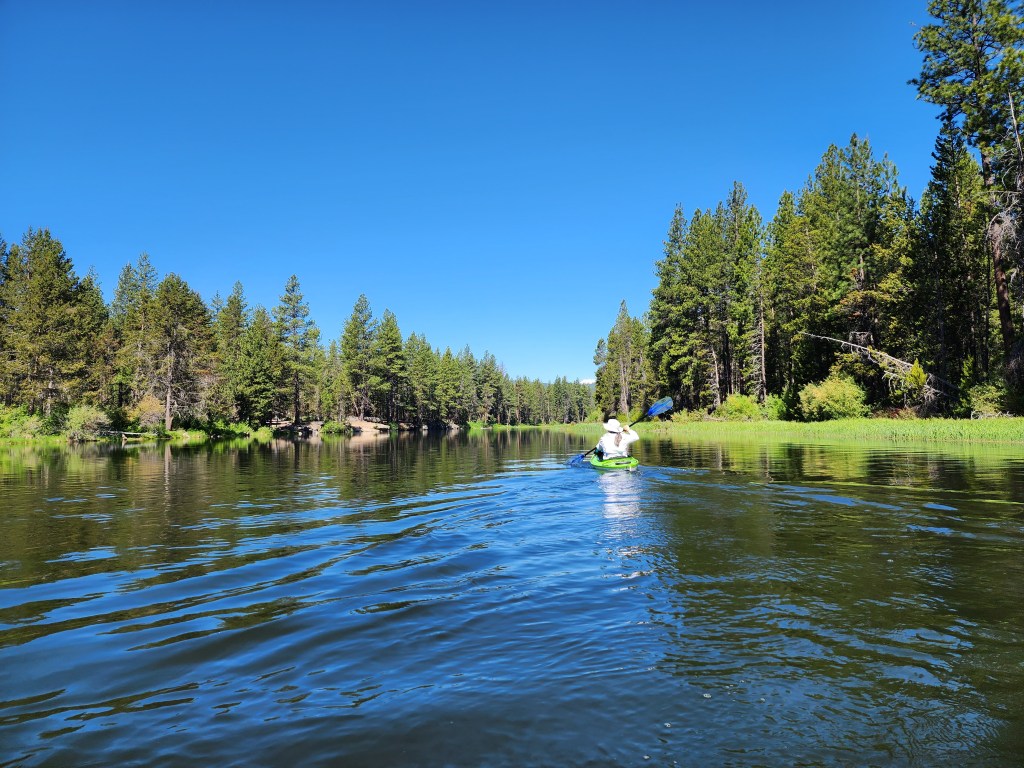
This morning my wife and I kayaked the Upper Deschutes from just above Benham Falls to Sunriver and back. I’m sure to the untrained eye the river looked great. The scenery certainly was nice. The river itself was very turbid, however, with low visibility. Silt was everywhere in the water column and coated the river bottom and aquatic plants. This amount of silt fills spawning beds, which require exposed gravel, degrades aquatic plant growth and reduces the abundance of macroinvertebrates. These aquatic insects are the primary food source for native trout and whitefish and an important food source for many avian species such as red wing blackbirds. I saw very few insects and only a handful of small fish rising to them.
The contrast between river health in the Upper Deschutes and the Lower Deschutes where I recently spent three days was striking. The lower section of the river was clear with great visibility, had beautiful, clean plant growth, and was stuffed with aquatic insects. Of course, the fishing was great.
The good news is that the Deschutes Basin Habitat Conservation Plan is a legally mandated plan that requires the irrigators to reduce the dramatic fluctuations in flows in the Upper Deschutes. It will take many more years to implement, however, and I hope I am alive to see the river restored to something close to its former glory. No such restoration plan exists for the Middle Deschutes, however, which also suffers from dramatic fluctuations due to irrigation diversions.
 Central Oregon Informed Angler