
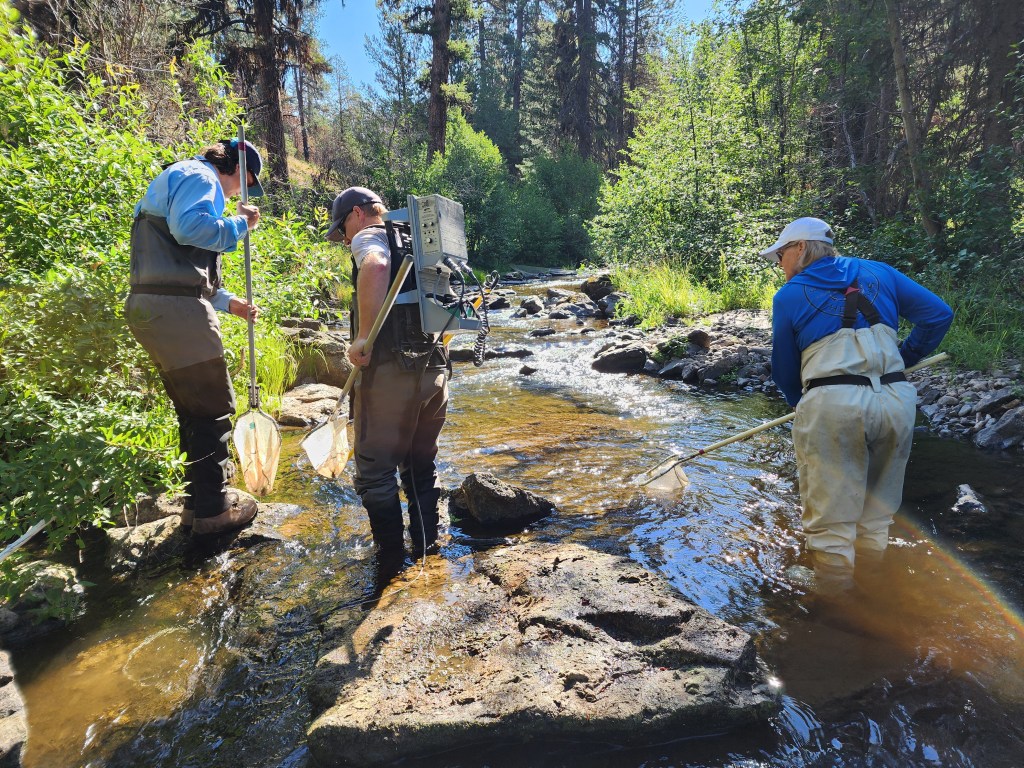
Approximately 30 years ago the Oregon Department of Fish & Wildlife started tracking fish populations in various small creeks in the Ochoco National Forest. Some creeks and much of the North Fork Crooked River were already too degraded to hold redband trout, but some creeks still had robust populations. Every three years the survey is repeated and population trends are tracked. The primary purpose of the survey is to inform forest managers as they consider timber sales and changes in various forest management practices. Not too long ago this data was one of the reasons the proposal for expanding off highway vehicle access in the forest was strongly opposed. The survey is done by ODFW and US Forest Service personnel with the help of volunteers. For the past three days I was one of those volunteers, camping in the mountains, and visiting a number of creeks I had never seen before.
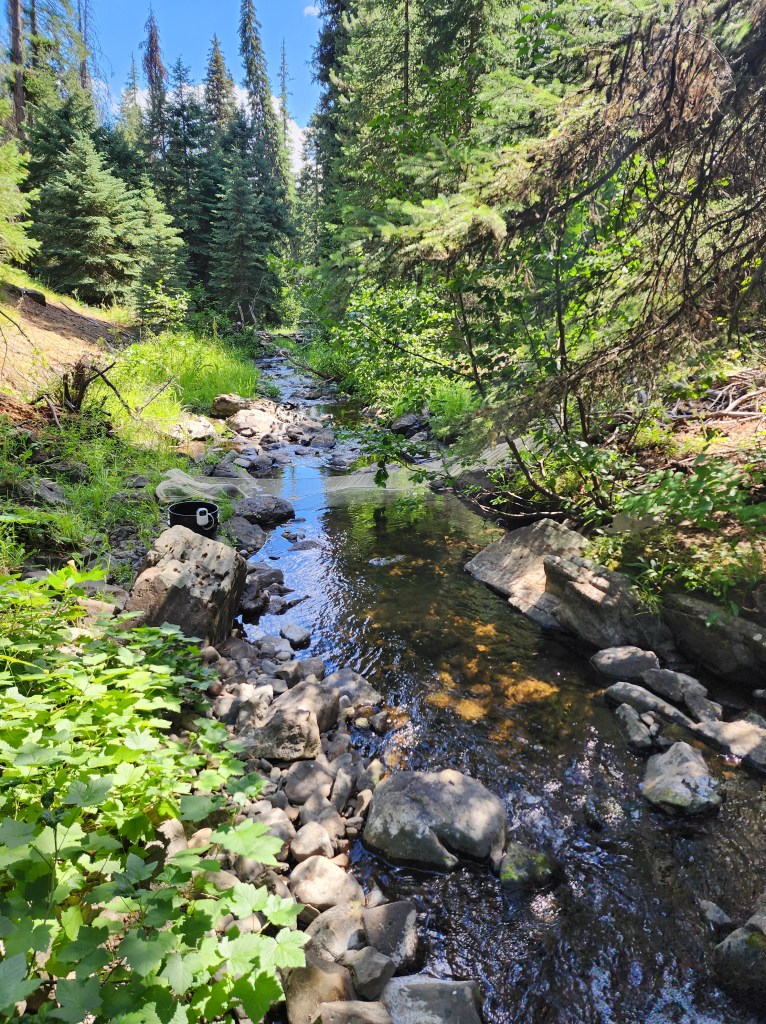
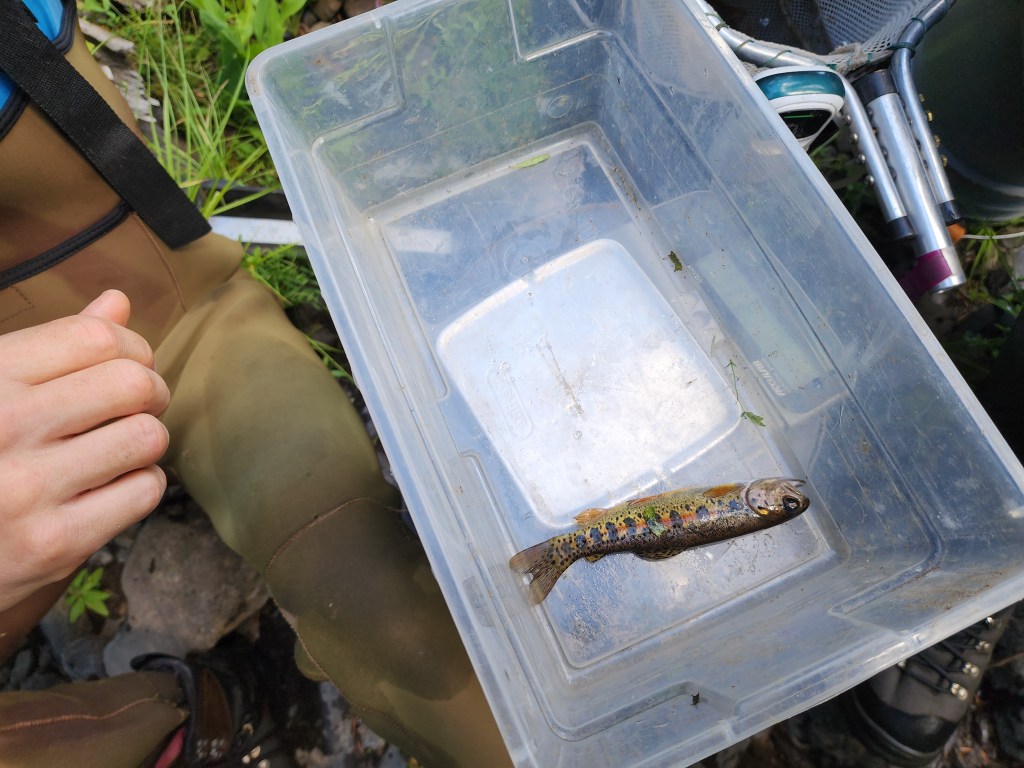
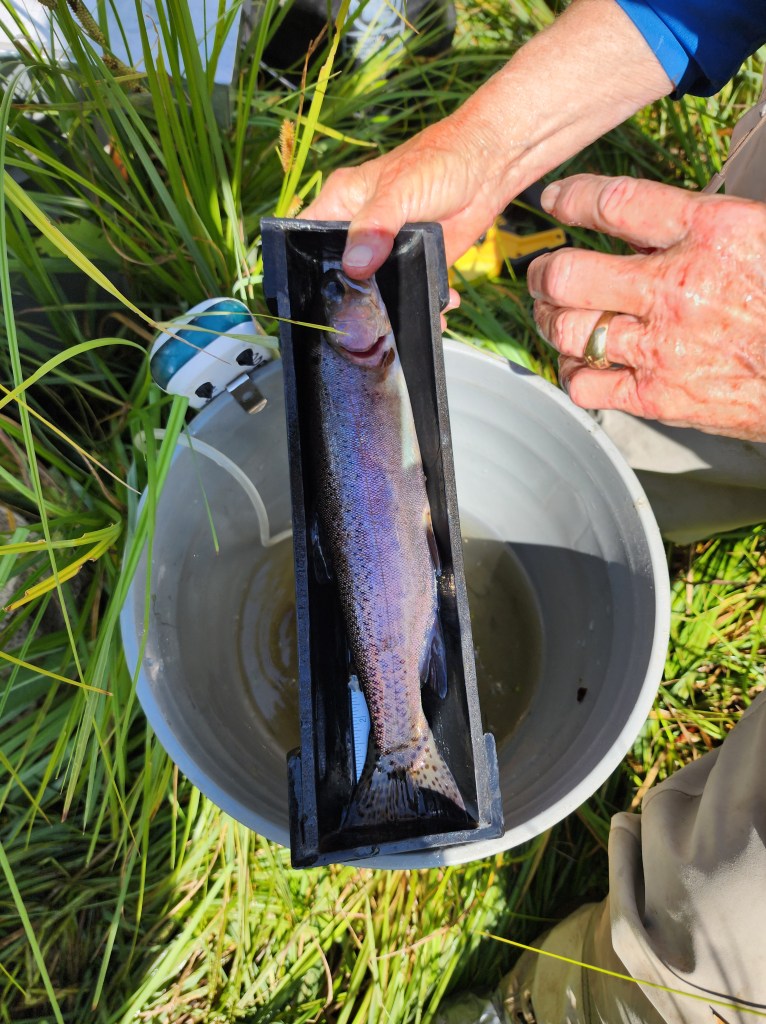
A total of 17 sites on nine creeks are sampled, the same creeks and stretches every three years. I helped with 10 sites. They were all very small creeks with very small fish, but lots of them. A big trout was eight inches, a handful were nine inches, and one fish was 12 inches. We found it on the narrowest creek of all, you could step over it, but it was deep with at least one great holding area.
We did not sample any place where I want to fish, but it was satisfying to see a strong population of wild, native redbands thriving in the Ochocos and to help maintain population data that can influence the USFS as they make forest management decisions. The bonus was another chance to spend extended quality time with fish biologists where as usual I learned a lot.

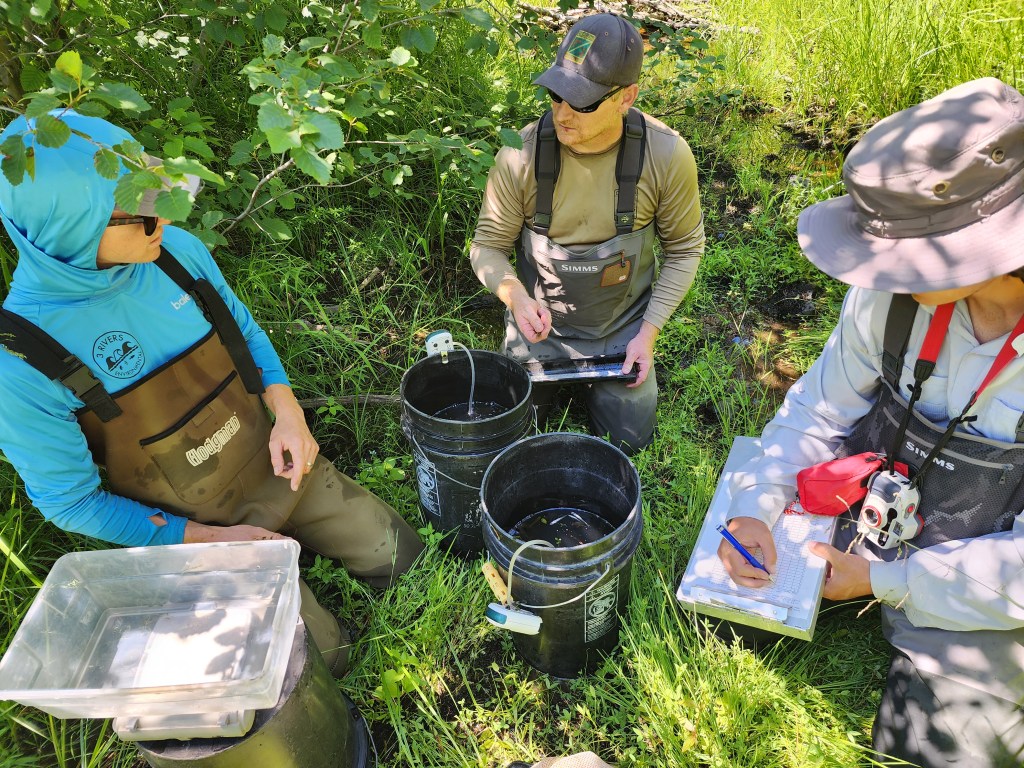
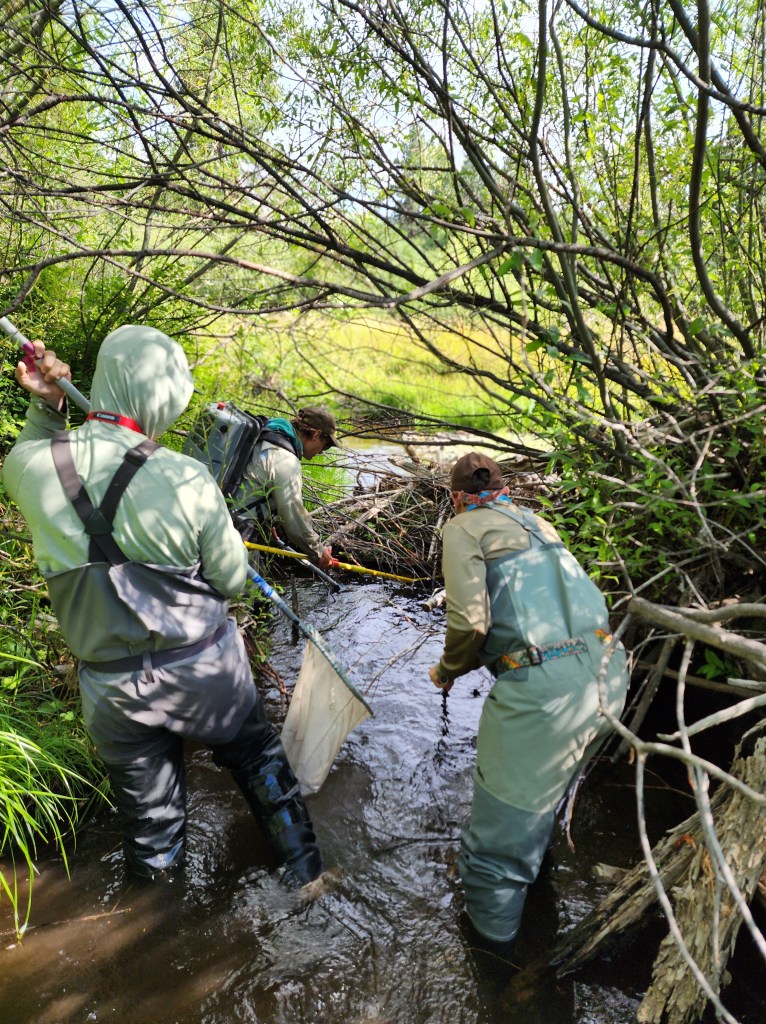
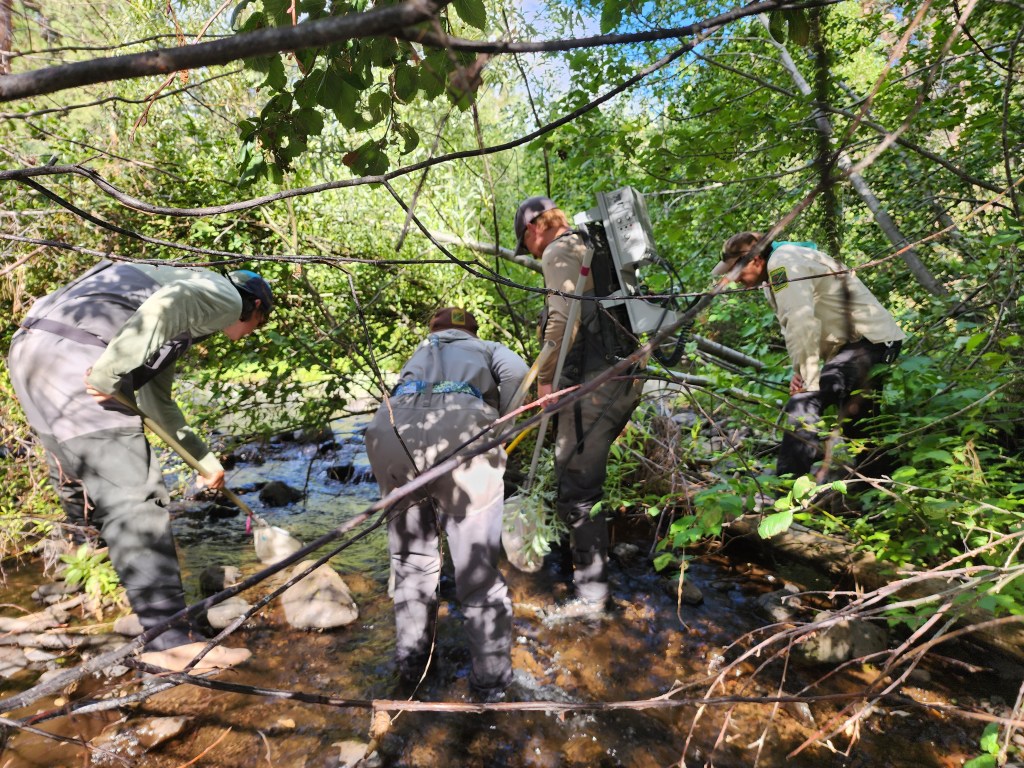
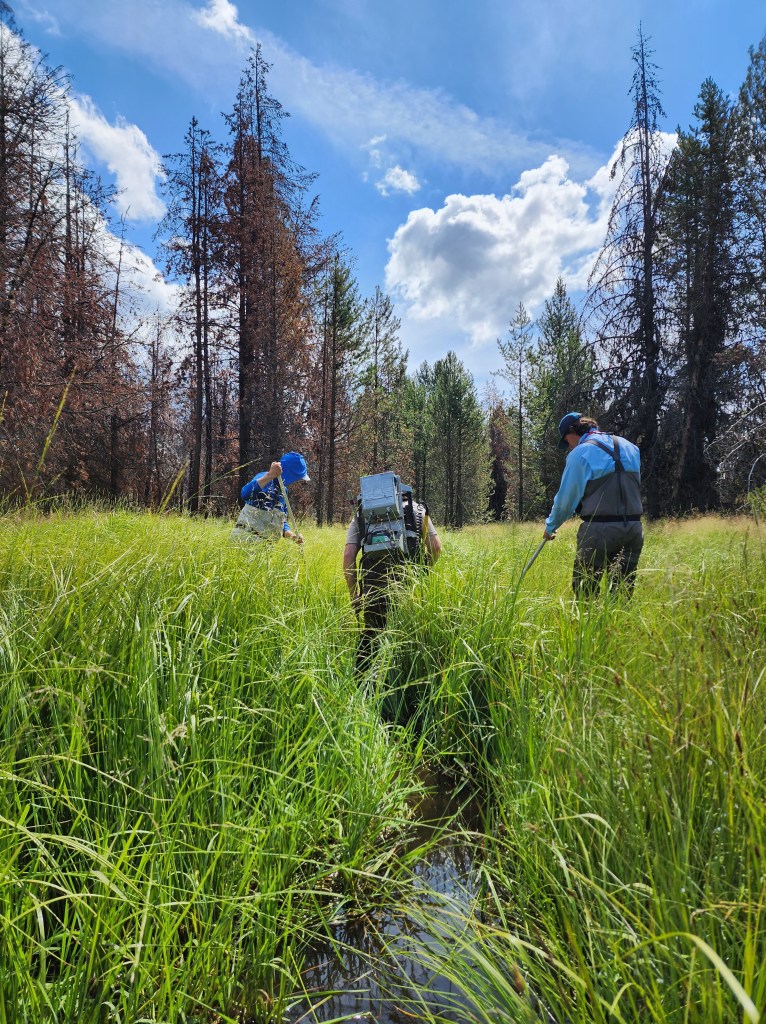
The process was simple but took some physical effort. An agency fish bio would wear a backpack that generated a weak electric current which would temporarily shock fish. Netters would grab the fish and put them in a bucket holding water which was being aerated. I was the low-skill bucket bearer for three days following behind the netters. We would make multiple passes over a 100 to 200 foot section of a creek and record the lengths of all trout and weights of those over 80 mm (a little over 3 inches).
 Central Oregon Informed Angler