
The notes from the monthly Crooked River call were released today. It should surprise no one that the outlook for Prineville Reservoir is not good. It is only 69% full and “unlikely” to fill as there is extremely low snowpack in the Ochoco Mountains. Flows into the Crooked River will be kept at around 80 cfs until irrigation season starts next month. My prediction is that the real impact will be felt at the end of irrigation season next fall (traditionally in mid October) when there will be little water left in the reservoir. I hope we don’t have a repeat of 2022 when flows were drastically reduced between the end of irrigation season and the beginning of HCP mandated flows which resulted in significant fish population declines.
Author: Yancy Lind
Who controls our water?
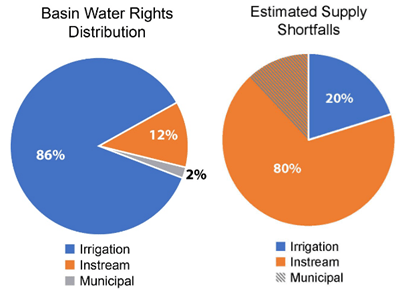
Source: Upper Deschutes River Basin Study Final Report, US Bureau of Reclamation and Oregon Water Resources Department, October 2019.
Now that we are most likely entering a period of severe drought (see this post for the latest thinking on this from the Oregon Water Resources Department) it’s time to revisit how water is used in Central Oregon (Deschutes, Jefferson, and Crook counties). A note on the title of this post: all water in our state is the property of the citizens of Oregon. Rights are granted for the use of that water with the stipulation that the water be used “beneficially” and “without waste”. In my opinion, these terms are not enforced with any reasonable interpretation of those provisions.
Read More »“The Blob” returns?
NOAA has reported that a west coast marine heatwave is forming that rivals “The Blob” heatwave of 2013-2016. The last time this happened anadromous fish returns were significantly depressed. Combined with the drought we are likely to be entering this is not good news for steelhead and salmon returns. “Past marine heatwaves shook up marine ecosystems that drove shifts of species, die-offs, and other disruptions of ecosystems in the Northeast Pacific Ocean.” Global warming marches on.
OWRD presentation to BOCC
Apologies for the terrible title for this post, but three days ago (March 2nd) the Oregon Water Resources Department gave a presentation to the Deschutes Board of County Commissioners on the current water outlook. In short, it’s not good. All of our local rivers are going to have very low flows this summer. It was a good presentation which I recommend you watch here. It starts at about minute 25 and lasts for just over an hour. The slide deck for the first presentation is here. Update: here’s the second presentation regarding groundwater.
Read More »DLT presentation recording
Jason Grant of the Deschutes Land Trust gave an online presentation last week titled “Caring for Our Rivers and Streams” that is worth watching. I have known Jason, the DLT’s Restoration Specialist, for many years. He is experienced, knowledgeable, and has taught me a lot. The presentation covers the stream restoration that DLT is doing which is impactful for all Central Oregon anglers.
Crooked flows reduced
Last Thursday the BoR made the decision to reduce Crooked River flows out of Bowman Dam from 100 cfs to 80 cfs. (It has actually been around 77 cfs since February 5th.) I was just able to read the minutes from the meeting where this decision was made and it is due to “unprecedented drought risk”. This is a major change from prior meeting minutes which were optimistic about precipitation in the second half of the winter. Both Prineville and Ochoco reservoirs are below normal for this time of year and now are not expected to fill as snowpack and inflows are at record lows.
Klamath River dam removal, another perspective
Prior to the removal of the four dams on the Klamath River in 2024 I would take a couple of multi day trips every winter to fish for steelhead in the stretch below Iron Gate down to Happy Camp. These were fun, productive excursions and it’s fun to fish from a boat. It’s the third winter since dam removal so I thought it was time to get back on the river and see it for myself. We are all familiar with the positive stories of salmon making their way past the dams and up into the Upper Klamath Basin, but this trip illustrated how damaged the river below the dams remains.
Read More »Coho success story
I have mixed feelings about the Native Fish Society. While they claim to be directed by the best available science, that has not always been the case, particularly when it comes to the Deschutes River. Regardless, I completely agree with their core position that we need to increase the abundance of wild salmonids and the best way to do that is to focus on suitable habitat for wild fish and to reduce the production of hatchery fish. A recent post on the NFS website outlines the amazing success of this approach with coho salmon in Oregon. The post is worth reading and be sure to watch the 30 minute presentation given last November to members of the Oregon senate. It’s compelling, although some senators on the panel seemed to be less than fully engaged. Locally, we have seen the success of this approach in the Metolius River where trout stocking ended in 1996.
John Day River temperature assessment
While not in Central Oregon, the John Day River is close enough for a long day trip or easy overnighter and has been a focus of mine for many years. I learned to Spey cast on the John Day and have had some excellent steelhead days on this undammed river draining a huge watershed. Of course, the John Day is suffering like so many other rivers in Oregon, primarily due to irrigation withdrawals and other impacts from by agriculture, timber, and development.
The Oregon Department of Environmental Quality is starting a far overdue assessment of temperature standards for the John Day. Better extremely late than never, I guess. It will take decades to see progress but at least they are starting something. I have tried to participate in these sort of things as a member of the public in the past but no longer have the patience for the politics and bureaucracy. (Note that the rulemaking advisory committee does not have a single member from an NGO representing fish or the environment.) If you want to follow along, however, here is the ODEQ webpage on the effort which includes information on how to watch meetings and here is a lot more information on TMDLs.
It’s too early to worry, but…
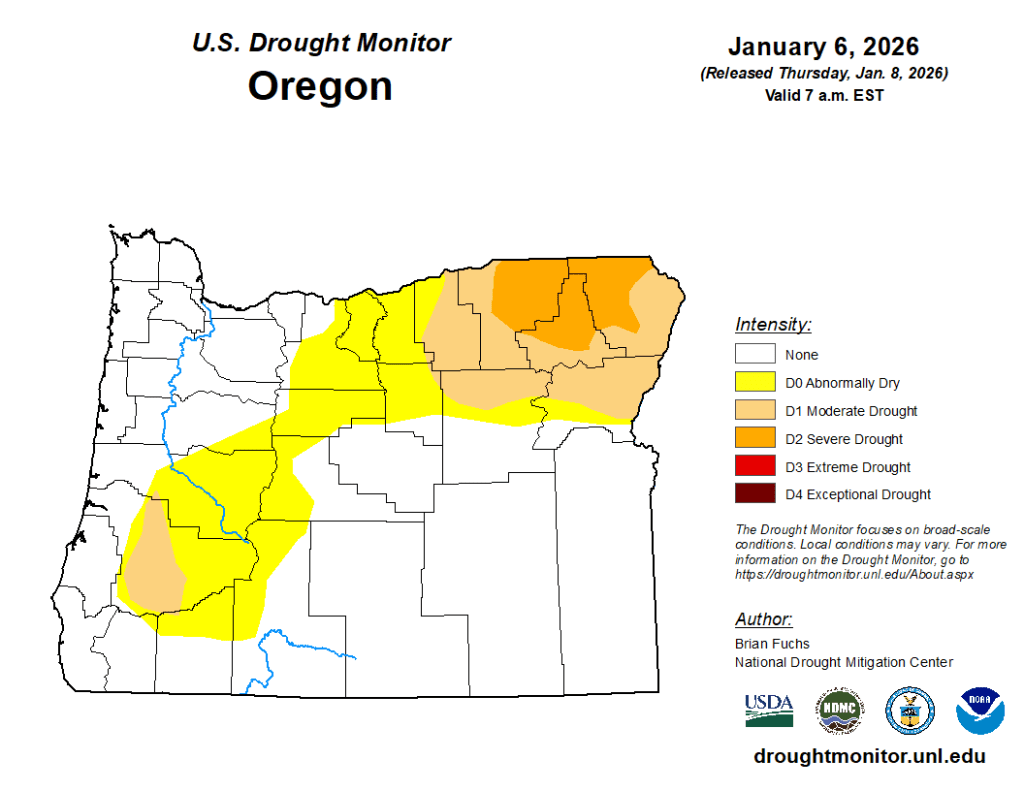
Like me, I’m sure that many of you are starting to be a little concerned about our winter so far. From a fishing perspective, it’s a mixed message. As you can see above, drought is not currently a major issue in Deschutes County or most of the state. This is due to the rain we have been getting. It’s a very different story when it comes to snowpack, however.
Read More »It’s easy to be a critic
For as long as the Selective Water Withdrawal tower has been in operation I have written posts detailing upstream and downstream fish passage. Those posts have documented that efforts to reintroduce anadromous fish into the Upper Deschutes Basin have not met the goals established by the Federal Energy Regulatory Commission for the operation of the Pelton Round Butte hydroelectric project, co-owned by Portland General Electric and the Confederated Tribes of Warm Springs. On multiple occasions I have gone as far as to say that the reintroduction effort has been a failure thus far.
My personal position is that this is terrible but there is no credible science showing that the operation of the SWW has had an adverse impact on Lower Deschutes fisheries. Further, the FERC license requires the continued operation of the SWW, and some reintroduction progress, however slowly, is occuring. Recently a post was made on the Native Fish Society’s blog introducing their new Lower Deschutes River Steward which I found unhelpful. It was critical of the reintroduction effort but did not provide any thoughts about how things could be improved.
Read More »Salmon in the Upper Klamath Basin
This morning’s ODFW commission meeting included a presentation on chinook passage above the recently removed dams on the Klamath River. In short, passage has been fantastic and more than surprising. It is worth watching the recording which starts around 54:24 and lasts about 28 minutes. If you want to see the presentation in a bigger window, go to YouTube and search on ODFW commission meetings.
Bull trout in the Lower Deschutes
I have been ignoring the drivel that continues to come out of the Deschutes River Alliance, but a local fly shop asked to me to comment on a recent post the DRA made titled “What’s Happening With Bull Trout on the Lower Deschutes?“. So, I took a look and, as usual, the tin foil hat crowd is off base. Yes, bull trout are ESA-listed which means that they are managed by the US Fish & Wildlife Service. Not Portland General Electric and not the Oregon Department of Fish & Wildlife. USFWS is the agency that has told Portland General Electric to transport some bull trout from Lake Billy Chinook to the Lower Deschutes. To reiterate, this is not a decision made by PGE and ODFW has nothing to do with it.
UPDATE 1/17/26: see below for an important comment from a fish biologist.
Read More »OFF TOPIC: Gemini 3.0
On rare occasions I post about something other than fish or water. I have a MSCS, like to maintain a current understanding of technology, and lately been spending an inordinate amount of time diving as deep as I can into the economic and investing aspects of AI. Recently, Paul Kedrosky has emerged as a compelling advocate of the AI bubble position, at least over the near term. This morning I asked Gemini “what are the errors in paul kedrosky’s analysis of an AI bubble” and was surprised by how quickly a detailed response was provided. LLMs clearly have limitations and uncertainties, especially from an economics and investor perspective, but they have become huge time savers for the sort of research and thinking I do. An LLM is not intelligent and could not have formulated Kedrosky’s argument but its ability to quickly provide an outline of a counterargument based on available sources in an obscure area was impressive. I still don’t understand how an AI company makes money by giving away access to these tools but they sure are useful.
ODEQ presentation on Upper Deschutes Basin water quality
Readers of this blog may recall that I am a member of the Deschutes Basin Water Collaborative which is nearing the end of a multiyear attempt to create a plan to address a wide range of water issues based on the state’s placed-based water planning process. It’s been a long, tedious process and, unsurprisingly, the outcome is going to be disappointing, but there have been informative conversations and presentations. One such presentation was given a few days ago and has been posted. “Water Quality Program Work in the Deschutes Basin” was a presentation by the Oregon Department of Environmental Quality which covered their monitoring of “impoundments” (lakes and reservoirs) in the Deschutes River system from the headwaters to Lake Billy Chinook. I found it interesting and frustrating. The recording is of the entire DBWC meeting, the ODEQ presentation starts at 44 minutes and 50 seconds and lasts an hour and five minutes.
ODFW Central Oregon update
Two days ago Tim Porter from ODFW gave his annual presentation to Central Oregon Flyfishers on all things Central Oregon. You can see his slides below but I’ll provide a quick overview. Tui Chub trapping on East Lake continues but there is no identified funding for future efforts. New funding is being sought and tiger trout will be planted in East and Paulina next fall. Tigers have been very effective in controlling chub in Diamond Lake. Hopefully we will not see an explosion of chubs in East and Paulina.
Read More »Farmland or housing? What about water?
The Bulletin recently ran a story titled “Farmland or housing? Advocates, Deschutes County dig in on rural land use fight“, which discussed opposition by Central Oregon LandWatch to county efforts to rezone farmland for housing and other uses. There is long standing tension between those who want to develop outside current urban growth boundaries and those who want higher density within the UGB. More nuance is provided in the story but omitted was any discussion of water. UPDATE: the Bulletin ran a slightly shorter and lightly edited version of this which I submitted.
Read More »2025 spring chinook returns
I’m a couple of weeks late posting about this year’s spring chinook returns to the Upper Deschutes Basin as part of the reintroduction program. Some of that is due to being careful to wait until the end of the run and some due to the fact that Portland General Electric has stopped posting the spreadsheet that shows daily counts of fish passed through the facility. As usual, however, they are very responsive and helpful when contacted and I now have the data. It’s mixed news.
Read More »“Understanding Middle Deschutes flows”
After reading yesterday’s post on the recent Upper Deschutes fish salvage a reader contacted me and asked, “I’m hoping you can help me understand something. Why is the Middle Deschutes running so high when the Upper Deschutes is so low. Where is the water coming from?”. Every now and then I am reminded that not every reader of this blog has been deeply immersed in local water issues for years and years and I should periodically revisit some topics. Here was my response to his email.
Read More »Upper Deschutes fish salvage
Readers of this blog have undoubtedly already read about the recent fish salvage operation in one side channel of the Upper Deschutes River organized by the Deschutes River Conservancy. Claims of 10,000 fish saved have been made. I don’t know how this number was determined and no size or condition factor data has been provided but years ago ODFW dismissed this operation as largely biologically insignificant. The annual dewatering of this particular side channel has been going on for decades, there are other areas that are also dewatered, and most of the fish captured when ODFW was involved were very small. Fingerlings moved from rearing habitat to mainstem areas will have very low survival rates. Nonetheless, I commend the volunteers who want to have some positive impact. There’s nothing wrong with doing something.
Read More »Steelhead porn
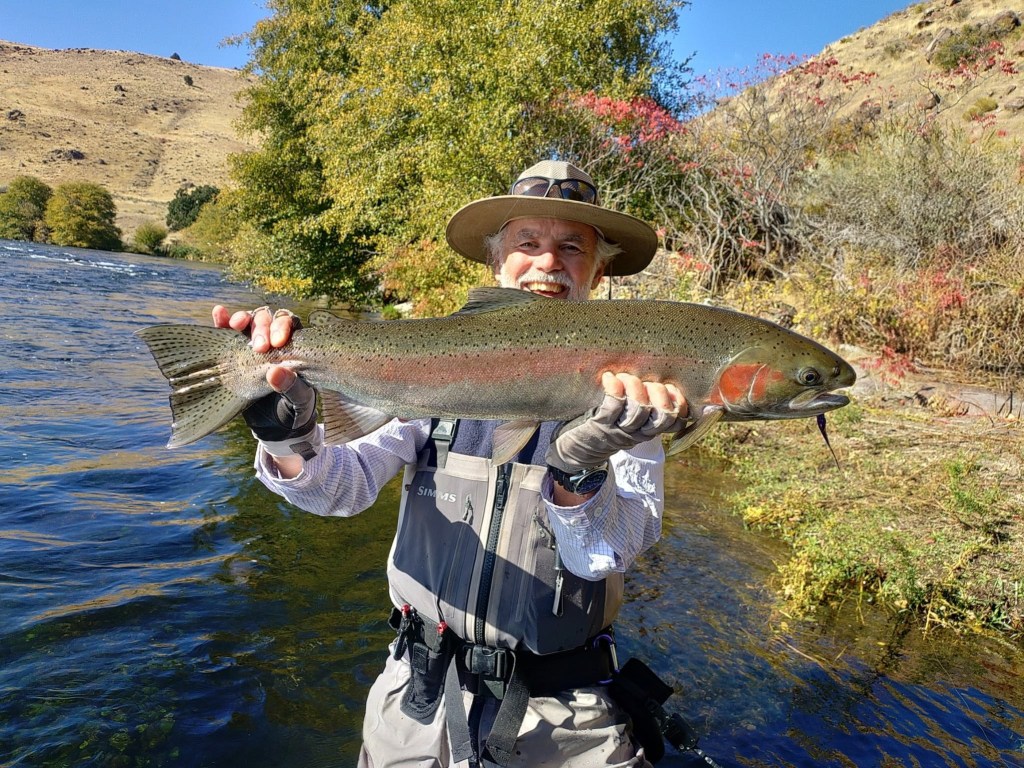
I try to avoid posting too much fish porn, but it’s been a while. We saw a beautiful sunrise before having a good day swinging flies for steelhead on the Lower Deschutes yesterday. I hooked into three fish. The middle sized one is in the photo below, it was somewhere over 32″ based on it’s length compared to my wingspan. Perhaps as much as 36″. I hope you are getting out there.

Salmon in the Upper Klamath Basin
Readers of this blog have probably already seen the reports that chinook are now in the Upper Klamath Basin. If not, here’s the ODFW press release and here’s a story on OPB. Clearly, this is fantastic news. I have closely tracked the dam removal efforts for many years and am happy that I was able to play a very, very small part in this when I was on the ODFW Restoration and Enhancement Board where we toured the J.C. Boyle Dam when removal was not certain and allocated funds for an important scientific study and future restoration work. It was a tiny part of a far larger effort, but every little bit mattered in early on. There’s much remaining to be done, especially upgrading the ladder at the Keno Dam, but good news like this is more than welcome these days.
Remote spots in the Ochocos

I spent the last two days camped in the Ochocos helping local ODFW biologists sample a remote river about two hours from Bend. This is the second trip I’ve done this year doing this in different areas. I previously had not spent any time exploring the Ochocos. Access is limited and pretty rough in spots. It’s not a premier fishing destination but it is beautiful and it is great to see that trout can survive at some level in small, heavily degraded rivers and streams. Cows, water diversions, and drought have certainly made an impact on what were once better aquatic environments.
Read More »LBC Pumping Station
Some of you may remember that about four years ago North Unit Irrigation District floated an idea to move their aging pumping station from the Crooked River to Lake Billy Chinook. I registered my concern with this plan as originally outlined. Thankfully, NUID was open to listening to my concerns. As I mentioned to them in a subsequent conversation, I believe the angling community could either enthusiastically support this plan or be in wild opposition. Yesterday an update on the plan was presented to the Deschutes Basin Water Collaborative and they said all the right things from my perspective.
Read More »Oppose HR 2073
I am a lifetime member of the Association of NW Steelheaders. I have been reconsidering my association with them as they have been sucked into the Deschutes River Alliance camp and actively spreading disinformation from the tin foil hat crowd but they continue to advocate for Snake River Dam removal, something that all steelhead and salmon anglers should care about. Here is a recent post from them on HR 2073, legislation introduced into the US House of Representatives that would prohibit the use of federal funds to allow or study the breach or alteration of the lower Snake River Dams. The post also includes a link for you to register your opposition to this bill.
PGE will change their fish count reporting
After my last post, I was contacted by Portland General Electric and told that prior to the DRA’s post and mine, PGE had decided to include fish counts for both hatchery and naturally raised fish passed into Lake Billy Chinook. I was glad to hear that. I have always found PGE’s fisheries biologists to be open to feedback and dialogue and am appreciative of their efforts. I was told that the changes will be reflected in the August reports on their website and should be available soon.
The DRA is right on this one, plus a comment about Klamath River Dam removal
As readers of this blog know, I am a frequent critic of the Deschutes River Alliance. But, I have to acknowledge the extremely rare occurrence of the DRA getting something correct. As they point out in their latest blog post, Portland General Electric has changed the way in which they report steelhead returns. PGE no longer differentiates between natural origin steelhead and hatchery stock passed above the Pelton Round Butte project. As I wrote about last May, it is disingenuous for PGE to lump these together when reporting total steelhead returns. There is a huge difference between returning fish that were naturally spawned in the Upper Deschutes Basin and those spawned in a hatchery.
Read More »Good news for the Crooked River this winter
The notes from the latest Prineville Reservoir status meeting were recently released. This is a monthly meeting between the Bureau of Reclamation, other agencies, irrigation districts, and the City of Prineville. The BoR has determined that they will be able to maintain at least 80 cfs between whenever irrigation flows out of Bowman Dam are turned off through October 14th. After that, minimum flows will be 100 cfs until the beginning of irrigation season on April 14, 2026. They cautioned that Prineville Reservoir is still over 60% full so flows could be much higher at times in the winter for flood control purposes depending on rain and snowpack.
“Good science and bad science get published all the time”
As you probably already know, last week the Deschutes River Alliance sent out an email announcing the publication of a scientific article, “Water Quality and Biological Response in the Deschutes River, Oregon, Following the Installation of a Selective Water Withdrawal“, which concludes that the Selective Water Withdrawal Tower (SWW) has had a “negative influence” on the Lower Deschutes. Since I don’t trust the DRA (or the tin foil hat crowd as I like to call them), I read the paper a couple of times, had multiple conversations with fish biologists who are intimately familiar with the Lower Deschutes, and had coffee with Joe Eilers, the principal author of the study, who lives in Bend. Not surprisingly, there is much more to this story than portrayed by the DRA. Keep reading for a lengthy discussion but a soundbite summary was provided by one of the fish biologists I spoke to: “good science and bad science get published all the time”. The new paper has elements of both.
Read More »Spring chinook in Lake Billy Chinook


In preparation for a Lower Deschutes trip next week, my friend Scott needed check out his jet boat. So, we headed to LBC for a few hours early this morning and figured we would do a little kokanee fishing at the mouth of the Metolius. It was a beautiful day and were surprised when Scott hooked into a very big fish. Was it a really big trout? A bull trout? No, it was a spring chinook. He landed it on a 4wt fly rod and 4x tippet! He briefly pulled it out of the water for a photo and then released it. Pretty cool. BTW, there were plenty of kokanee to be had there as well.
Little impact on the Middle Deschutes
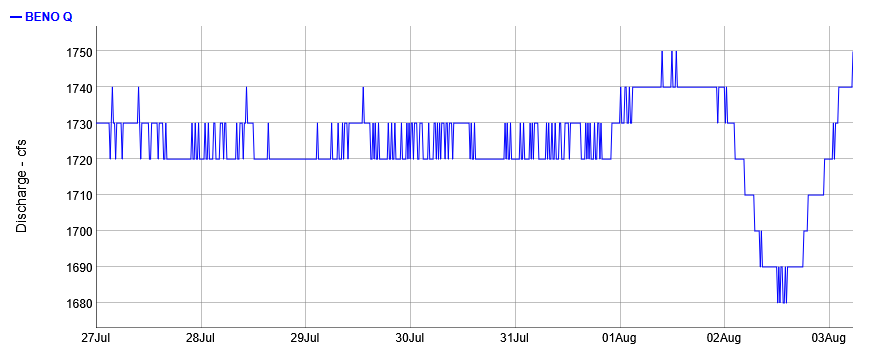
As I mentioned in the previous post, I spent three days last week in the Ochoco mountains helping ODFW and USFS personnel survey fish populations in various small creeks. Jerry George, ODFW’s Deschutes District Fish Biologist, was part of the survey work and while there was contacted to ask about lowering the Upper Deschutes to allow for the ongoing search for a missing person presumed drowned below Dillion Falls. Of course, he voiced no opposition with the caveat that flows in the Middle Deschutes not also be lowered. I was thankful for that but have been watching to see what would really happen. Looking at the charts, it looks like there was very little impact on the Middle Deschutes.
Read More »Ochoco National Forest creek fish survey
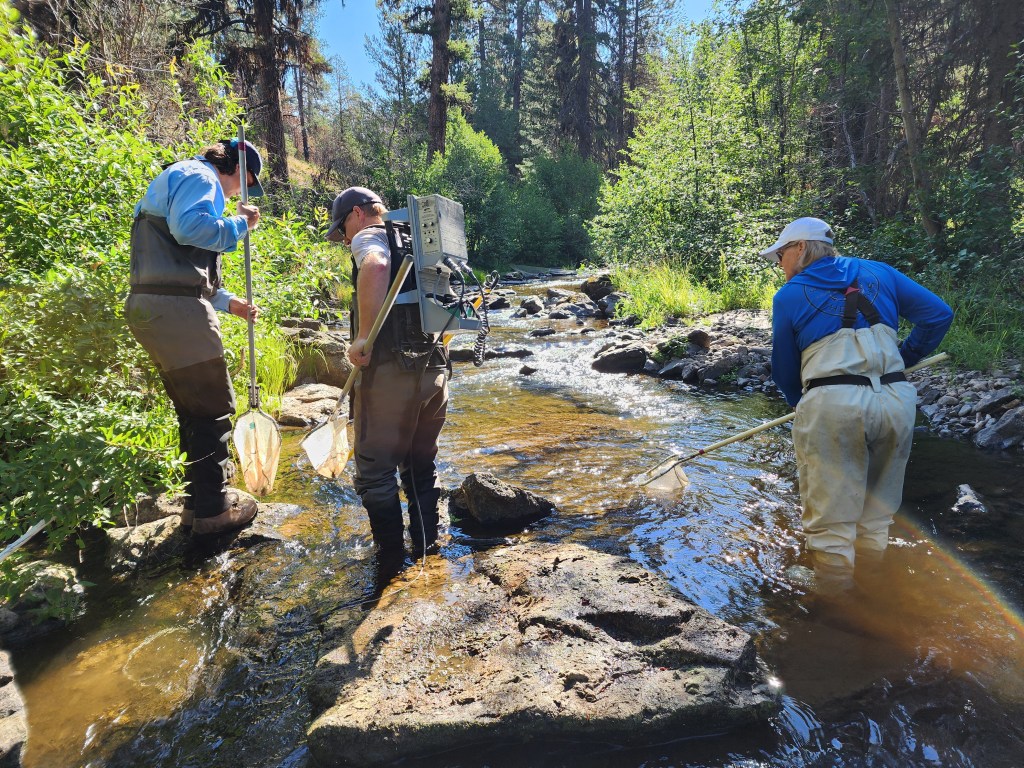
Approximately 30 years ago the Oregon Department of Fish & Wildlife started tracking fish populations in various small creeks in the Ochoco National Forest. Some creeks and much of the North Fork Crooked River were already too degraded to hold redband trout, but some creeks still had robust populations. Every three years the survey is repeated and population trends are tracked. The primary purpose of the survey is to inform forest managers as they consider timber sales and changes in various forest management practices. Not too long ago this data was one of the reasons the proposal for expanding off highway vehicle access in the forest was strongly opposed. The survey is done by ODFW and US Forest Service personnel with the help of volunteers. For the past three days I was one of those volunteers, camping in the mountains, and visiting a number of creeks I had never seen before.
Read More »2025 Deschutes fisheries workshop summary
Yesterday was the 31st annual Deschutes fisheries workshop. I can’t recall exactly when I started attending these but I think I’ve been to about half of them. I’ll post again when the presentations are made available online, but here’s a summary. The headline is that, once again, real science shows that the Lower Deschutes is in fine shape. Anadromous fish reintroduction has not been a success but it is not negatively impacting the lower river.
Read More »A potential issue at Paulina Lake
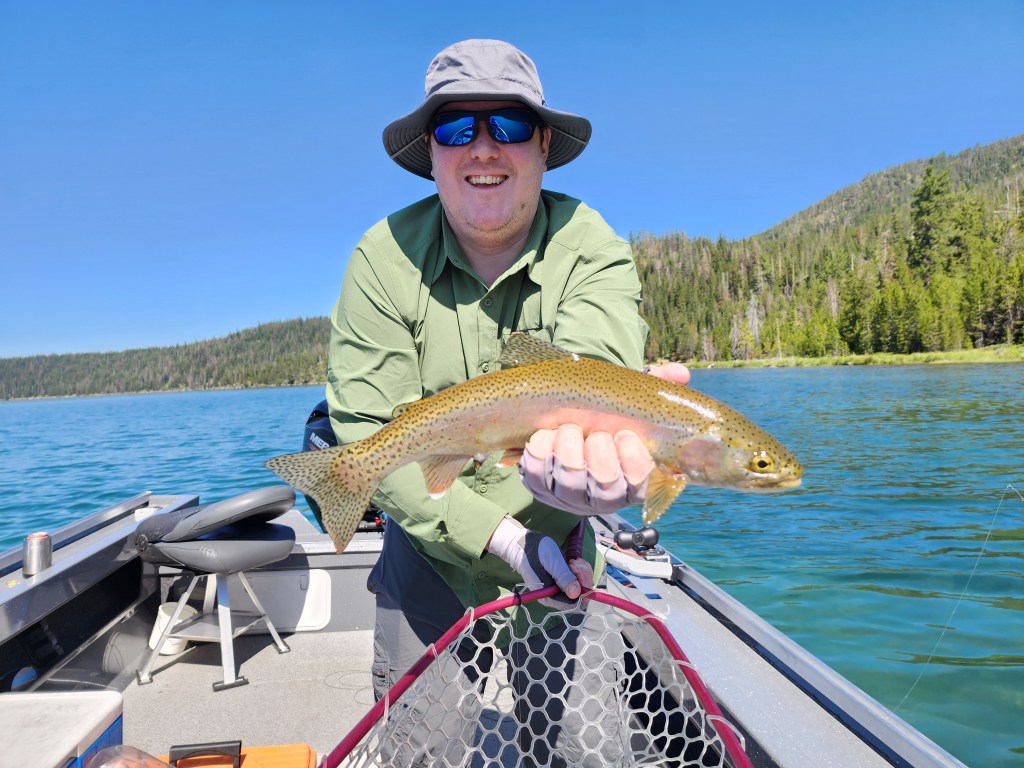
Over the past three months I have been exclusively fishing rivers in Oregon and Idaho. Today I got my lake boat out and headed to Paulina for the first time this year with one of my sons. As usual, it was beautiful, with very clear water, and plenty of willing fish. We landed more than our fair share, nothing huge, but lots of fun before the wind chased us off in the early afternoon. I am very concerned, however, by the incredible schools of tui chubs we encountered. They were everywhere in really big numbers. For many years, ODFW has been netting the chubs in East and Paulina lakes. Budget cuts have forced them to stop netting at Paulina and have a reduced program at East. It will be a real tragedy if funds are not found to resume netting at Paulina. The schools we saw were composed of small fish, but they will grow and reproduce quickly.
Wild Salmon Center presentation
One of the many hats I wear is to arrange monthly presentations for Central Oregon Flyfishers. As you would expect, these are mostly talks on fly fishing but a few every year are on environmental issues. Next Wednesday, July 16, we will hear from the Wild Salmon Center. WSC takes a different approach than other environmental groups working to protect fish. Founded in 1992 and run since 1998 by Oregon native and fly fishing fanatic Guido Rahr, WSC works to protect “strongholds,” places still supporting wild anadromous salmonids. There’s a book titled “Stronghold” about Guido that I really enjoyed reading. The staff and board of directors at WSC are truly impressive. It should be a good talk and anyone can attend this meeting which is held at the Bend Elk’s Club and starts at 6 pm.
The Source: “When Wells Run Dry”
Yesterday the Source posted an article titled “When Wells Run Dry“. Readers of this blog should be very familiar with the themes covered, specifically the fact that domestic (exempt) wells are allowed to pump 15,000 gallons a day (!) and have no metering or monitoring. In spite of a few errors in reporting and some confusing passages (to be expected from a reporter who hasn’t been following water issues for years), it’s a reasonable overview of the issue. I have been writing about exempt wells for over a decade and appreciate the issue being highlighted once again.
Deschutes fisheries workshop discussion on parasites
The Deschutes River Alliance recently posted that recent research from Oregon State University showed that juvenile spring chinook salmon in the Deschutes “have experienced significant risk of infection and disease” from the parasite ceratonave shasta. Of course, the DRA blamed the operation of the Selective Water Withdrawal tower in Lake Billy Chinook. The author of the study will be presenting at the upcoming Deschutes Fisheries Workshop and I encourage you to attend to get the data without spin. The workshop is on July 17 and anyone can attend if you register here.
Deschutes steelhead closures
Yesterday ODFW announced angling closures on the lowermost sections of the Deschutes and John Day rivers and Eagle Creek in response to low summer steelhead projections. As a friend emailed to me, “a feeble attempt to give the fish a thermal refuge. ODFW should just close the Columbia system for 4 years instead of trying to rehab stocks with band aids and duct tape”. That’s a rational thought. After last year’s good returns I certainly was looking forward to steelheading this season but knew that the good ocean conditions that lead to those returns were most likely an aberration on a generally worsening trend. Global warming marches on and our government is contributing to its acceleration.
Crooked River fish sampling
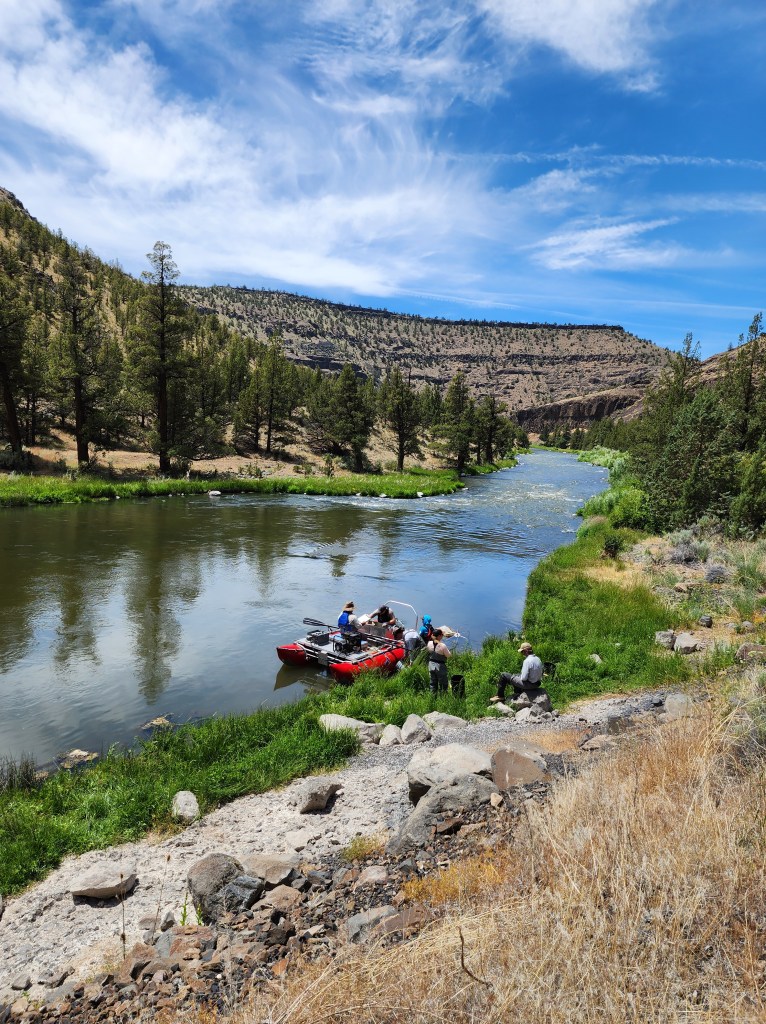
This week ODFW is performing their annual fish sampling on the upper half of the wild and scenic section of the Crooked River below Bowman Dam (Big Bend to Cobble Rock). As usual, I helped out one day carrying buckets of fish and releasing them in various places after they had been measured and weighed. I’ll post the final report from ODFW once it has been completed sometime in August, but the biologist’s initial assessment is the fish population looks very similar to last year. Lots of whitefish and trout, some with reasonable size including a handful of redbands over 16″ yesterday, the day I volunteered. The other volunteer that day is a frequent angler on the Crooked and, like the first time I volunteered many years ago, was surprised by how many fish were in locations that he had never fished. Keeping reading for a video.
Read More »Spring chinook are heading up the Crooked
Don’t try to catch them! Thankfully, there’s enough water in the river to let them get upstream of Opal Springs Dam.
River of No Return

My wife and I returned yesterday from a 100 mile, six day float down the Middle Fork of the Salmon River in Idaho. This river flows through the Frank Church – River of No Return Wilderness. We had some tough weather for four days but we were prepared and it was beautiful. It was great to be disconnected from normal life for a while.
Of course, we returned to concerning news on so many fronts, too typical these days, but I wanted to comment on the decision to end protections for 58 million acres of national forests by allowing road construction and logging, including in the Frank Church Wilderness. (This is an executive order and seperate from the bill being considered in the US Senate to sell public lands.) This order will have massive impact on many wilderness areas and this pristine river. The water was so clean and clear. Sediment runoff into the river from road construction and logging will be a disaster. If you want more on the trip, keep reading.
Read More »The future of Columbia River Basin anadromous fish
If you follow this blog you’ve probably been reading about the Trump administration’s recent decision to pull out of an agreement to restore salmon and steelhead populations in the Columbia Basin. Here’s a good overview from OPB. Needless to say, this is terrible news for anadromous fish. I have nothing to add to this except to direct you to a YouTube video of last Friday’s ODFW commission meeting where it was discussed starting at 2:34:49. (Yes, I do watch these things.) The frustration on the part of ODFW staff and the commission was on full display. Along those same lines, a discussion starting at 1:22:33 by the commissioners about the legislature overriding their decisions was telling. We live in a political world and ODFW has little political power.
2025 fisheries workshop
For over three decades Portland General Electric has held an annual “workshop” that discusses the health of the Lower Deschutes River and related topics. Presentations are from a variety of biologists from a range of agencies. If you wanted to hear real, peer-reviewed science about the lower river I suggest you attend. Here’s a link to the registration form. I have been going for many years and have found it invaluable, here’s my post summarizing last year’s workshop.
Upper Deschutes condition
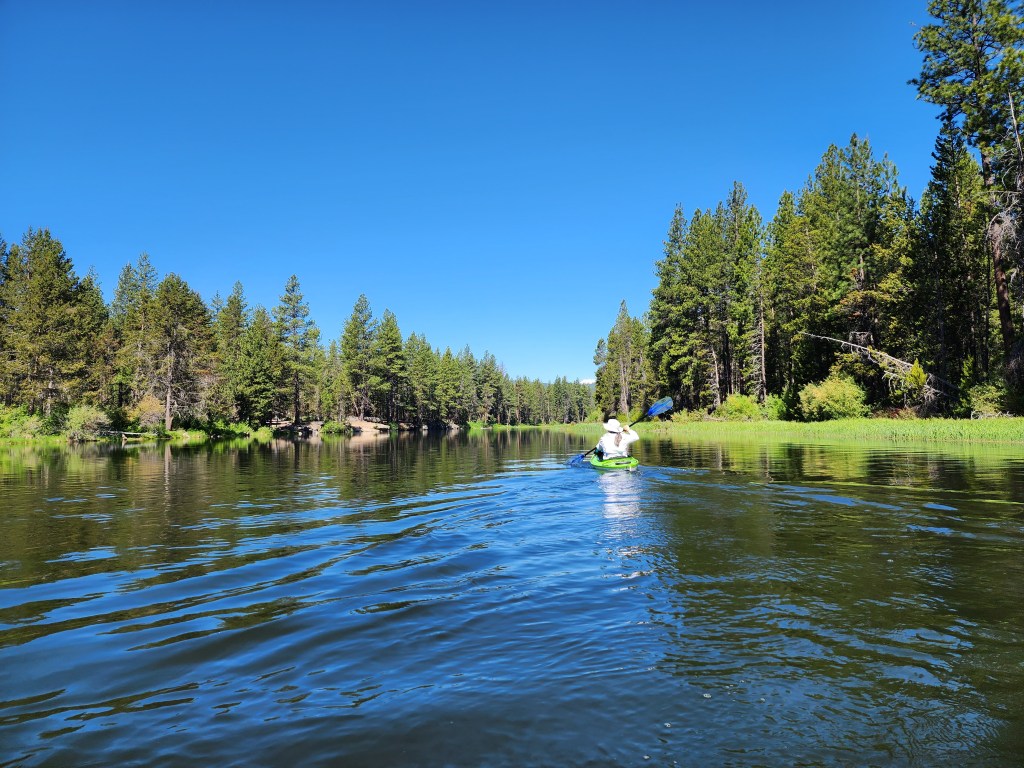
This morning my wife and I kayaked the Upper Deschutes from just above Benham Falls to Sunriver and back. I’m sure to the untrained eye the river looked great. The scenery certainly was nice. The river itself was very turbid, however, with low visibility. Silt was everywhere in the water column and coated the river bottom and aquatic plants. This amount of silt fills spawning beds, which require exposed gravel, degrades aquatic plant growth and reduces the abundance of macroinvertebrates. These aquatic insects are the primary food source for native trout and whitefish and an important food source for many avian species such as red wing blackbirds. I saw very few insects and only a handful of small fish rising to them.
Read More »Lower D camping, the Bulletin, and potential steelhead angling restrictions
I’m back from three days of camping and fishing on the Lower Deschutes. What a beautiful river holding wonderful, healthy fish. The only problem I saw is that it is being loved to death. So many people. But we fished early and late in the day to avoid most of the crowds and fished the tough to access spots to find fish that were not leader shy from weeks of extreme angling pressure.
While I was away the Bulletin ran a column I wrote on a couple of water bills. If you don’t have a subscription see the text below. Also, ODFW has released their forecast for 2025 salmon and steelhead returns in the Columbia Basin, which includes the Deschutes. The outlook for summer steelhead is “very poor”. These forecasts have a mixed history of accuracy but ODFW is preparing for the potential of angling restrictions.
Read More »Deschutes water bank
Today the Bulletin had a story about legislation making its way through the Oregon legislature to create a “water bank” (HB 3806). The water bank concept has been around for over a decade and is simple and logical in concept. It would allow irrigators who do not need some or all their water to sell it to others who want it, with the water bank as the facilitating organization. There have been attempts to implement this in the past with limited success, some of which is due to restrictions on how water can be transferred between irrigators and districts. HB 3806 is a worthwhile attempt to overcome those obstacles. As usual, however, there is more to this.
Read More »2024-2025 Deschutes steelhead reintroduction final
The end of April concludes the 2024-2025 steelhead year on the Deschutes River. Portland General Electric still has not updated their Deschutes fish count spreadsheet on their website, but I had an email exchange with a biologist and manager in their fisheries department and received the info I needed for this post. I have written a little on this topic recently (see here and here), so this post will primarily be updates followed by some related commentary. 968 steelhead were mostly passed into Lake Billy Chinook (some were released directly into a tributary of LBC), smashing the previous record. This is great news, but, as I have mentioned in prior posts, this is not quite as good as it looks on the surface.
Read More »Raise the Deschutes seminar recording
The Deschutes River Conservancy has an ongoing seminar series called Raise the Deschutes. I have been critical of the spin and omissions in most of them, but their most recent one titled “Fish, Flows, and the Future: Conservation and Management in the Deschutes Basin” is pretty good. Fish biologists from the US Forest Service and Portland General Electric provide a good overview of restoration work and fish status for resident fish and the anadromous fish reintroduction program. The target audience is people who have limited if any knowledge of the topic but there were some interesting tidbits and updates in there even for people who have been immersed in the topic for a long time. It was long, but worth watching. OK, I do have a criticism: there was no discussion of habitat or resident fish health in the Middle Deschutes.
East Lake boat ramps
This morning another member of Central Oregon Flyfishers and I met with a couple of the remaining staff at the Bend US Forest Service office to ask about extending the boat ramps at East Lake. They are aware of the problem and are trying to address it but a solution is at least three years out, likely longer. They are as frustrated as anyone but have many obstacles. Staff cuts have been huge. They have to consult with tribal authorities to get permission to dig anything for cultural reasons. They need a NEPA analysis. Etc. They may have a solution that is being piloted outside of Central Oregon but it will be a couple of years before they can make a determination that it will work. The good news is that they are aware that toilets at local lakes closed far too early last year and will keep at least one toilet per lake open to the end of the season if snow levels allow.
Once again, pH is not an issue on the Lower Deschutes
The tin foil hat crowd, better known as the Deschutes River Alliance, recently made a blog post that continues to harp on pH levels in the Lower Deschutes. This is a tired topic, but since they keep making unproven claims, I’ll keep responding. Simply put, as independent scientists and ODFW have shown, and the courts have ruled, pH levels have not been a threat to fish in the Lower Deschutes.
Read More »Some comments on steelhead reintroduction

For counting purposes, the 2024-2025 steelhead season on the Lower Deschutes ends on April 30 and I will post final numbers and needed explanation after that. There will likely be more fish moving up into Upper Deschutes Basin tributaries from Lake Billy Chinook through May. (This recent post is a bit of a preview.) I have been talking to folks about the program recently, however, and have a few comments to make now. As readers of this blog know, this year has been positive for the reintroduction program. Many steelhead redds have been spotted in various upper basin tributaries so perhaps naturally spawned fish will be a non-trivial part of the returns in a few years. What’s troubling is the ongoing lack of management of the Crooked River for steelhead as well as many steelhead moving up the Metolius River.
Read More »Thornburgh: the beast that won’t die
You’ve probably already seen news reports on a court ruling upholding the Oregon Water Resource Department’s denial of a water right for the planned Thornburgh Resort. Here’s one from The Bulletin, one from the Source Weekly, and here’s a press release from WaterWatch. It would seem that lack of water would doom this development, but these guys have a ton of financial backing, have had serious setbacks in the past, and keep rising from the dead. Perhaps this is a final stake in the heart, but who knows?
Soapbox: I have been tracking this development for about 15 years. (And have an entire section on Thornburg in this blog.) Many groups have participated in fighting Thornburgh over the years at different times. Some have participated, gone silent and reemerged, some got involved late in the fight. The real local hero in this fight is Nunzie Gould who has been at it for over 20 years. (See this OPB story.) This tenacious woman has been involved from day one, shining a spotlight on the issue, and paying for numerous legal challenges. If it were not for Nunzie this monstrosity of a water sucking resort would have been built long ago. Thank you Nunzie!
Another misleading post from the DRA
The Deschutes River Alliance recently made a post about the steelhead reintroduction program that, true to form, had some accurate statements which were followed by misleading and unsupported claims. It is true that somewhere around 30%, to up to 40% in some years, of reintroduced steelhead smolts are “direct release”, not released into a tributary of Lake Billy Chinook. As usual, however, the story is more complicated and nuanced than told by the DRA.
Read More »Dying to go trout fishing?
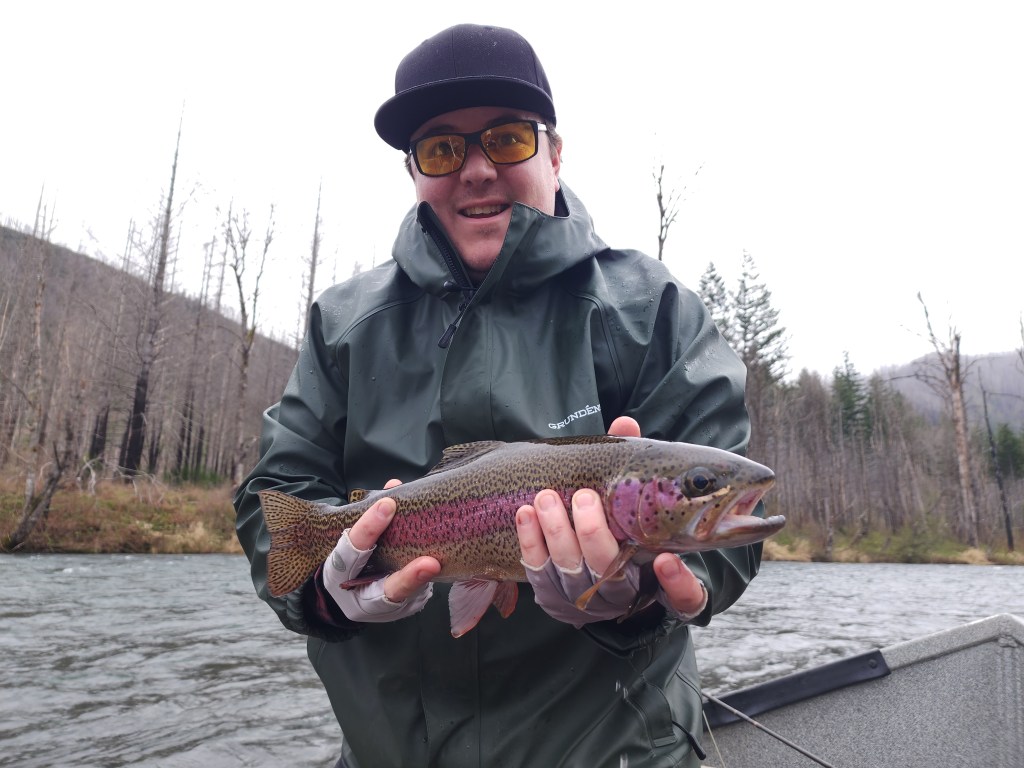
Yesterday I took one of my sons fishing on the McKenzie. It was cool and wet, and the river was a little high, but we landed a few nice rainbows, a couple of big whitefish, and many smaller fish. It’s not the Deschutes, but it is awfully nice to fish from a boat. An easy day trip to satisfy your need for trout before the Deschutes opens.
Irrigation season begins

This chart of flows in the Deschutes River below the North Canal Dam near the Mt. Washington Bridge in Bend says it all. The chart will get worse for fish over the next few weeks as irrigation diversions ramp up to 100% on May 15th. See COID’s schedule here.
Bulletin article on steelhead returns
I’ve been putting off writing about Deschutes steelhead returns as there are still almost two months left in the 2024/2025 season, and a good discussion should include where the fish in the Upper Basin have been detected, but the Bulletin ran a story that, as usual, needs some comment. Clearly, the number of adult steelhead that have been passed into Lake Billy Chinook is far in excess of any other return year. But, the story is more complicated than portrayed in the article.
Read More »Latest Hatchery Resilience Reports
For about two years, ODFW has been working on “hatchery resilience“, an analysis of state owned hatcheries and developing an understanding of what needs to be done to make them resilient in the face of a range of issues including aging infrastructure, rising costs, increased fire risk, and warmer, less reliable water sources. Here’s my first post on this topic. Here’s the last one. Last week ODFW released their latest reports. Keep reading for a few comments. This is an important topic for all anglers in Oregon, including those of us in Central Oregon who primarily target trout.
Read More »Central Oregon Flyfishers Auction
I am a long time member of Central Oregon Flyfishers, a great organization for local fly anglers with over 250 members. This year we have moved part of our annual banquet online and anyone can bid on items. There might be something there of interest to you. Check it out: https://new.biddingowl.com/COF2025Auction
Ochoco Preserve Photos

You are probably aware of the Deschutes Land Trusts’ Ochoco Preserve. It is a restoration project where Ochoco and McKay creeks meet the Crooked River. Flows in this section of the Crooked River are higher than below Bowman Dam during non-irrigation season due to tributary inflows. Here are some photos from DLT restoration specialist Jason Grant that he took yesterday when flows at the site were over 3,400 cfs. If you have visited the preserve you know that this is not how it normally looks. The good news is that the river can spread out at the preserve and do what rivers are supposed to do at high flows. Hopefully spawning steelhead have found their way to this project and even gone up McKay Creek.
Read More »Bad news for fish in the Crooked River
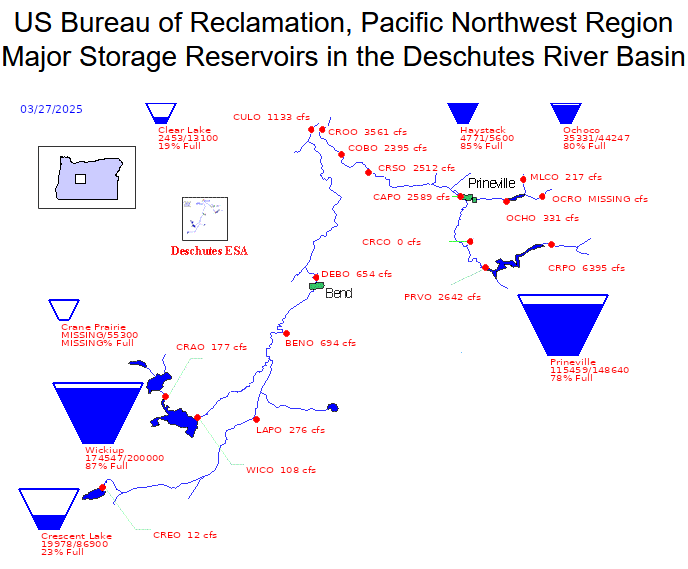
As you can see in the chart above from yesterday, flows in and out of Prineville Reservoir are very high and gas bubble disease is sure to occur. If you look at the details this morning, it is even worse.
Read More »DBHCP under threat?
Shortly after the last presidential election I wrote a post that questioned the future of the Deschutes Basin Habitat Conservation Plan. There have long been calls to eliminate the Endangered Species Act, something that President Trump suggested in his first term. Short of that, if the Environmental Protection Agency is eliminated, gutted, or largely defunded there could be no enforcement of the ESA mandated DBHCP. I was told by many that this could not happen. Well, here’s a recent article from Oregon Public Broadcasting that suggests the same. The article also highlights divisions within the local irrigation community. The irrigation districts clearly want to continue to receive federal funding for canal piping, funds that have now been frozen, while some individual irrigators just want the ESA to go away. Either way, for now at least, it is not business as usual.
Good day on Lake Billy Chinook
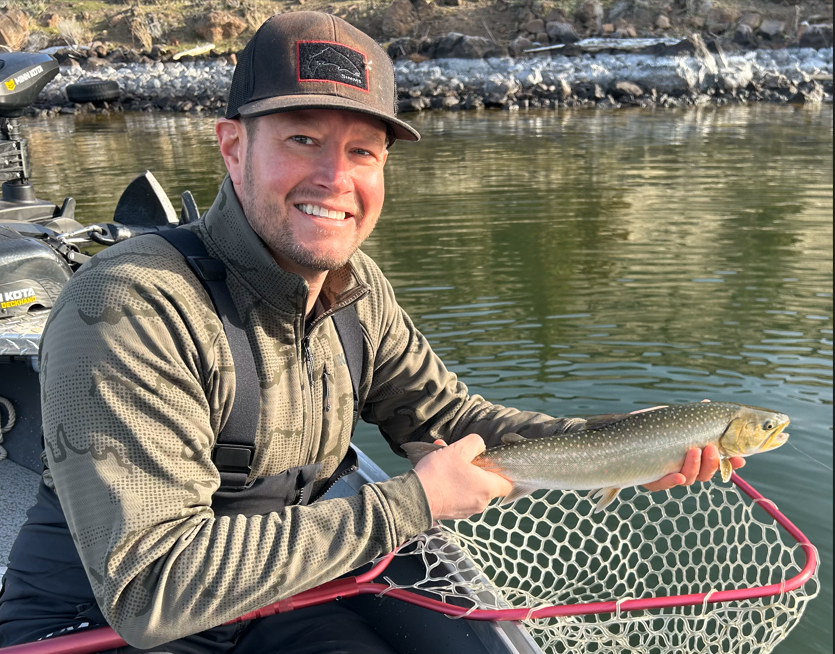
Yesterday I played guide and took a fishing friend and one of my sons to Lake Billy Chinook. 22 bull trout were netted, all before noon when the bite stopped. Nothing huge, but a few around 18-19″ (measured) and all were very feisty. The lake is in great shape. A good day. I could see bigger fish on the finder, but they were down 50+ feet, too deep for fly fishing even with a 7ips line. Hopefully, they will come up as smolt migration increases.
Here we go again

Above is a graph of flows in the Middle Deschutes below the North Canal Dam in Bend. A “stock run” by Central Oregon Irrigation District dropped flows significantly in just 10 hours. I understand that stock animals need water, but why not slowly drop the river to lessen impact on fish? Of course, I have been complaining about this for years and gotten nowhere. Unfortunately, I don’t expect irrigators to actually start caring about aquatic ecosystems any time soon regardless of their statements otherwise.
My latest trip to the coast
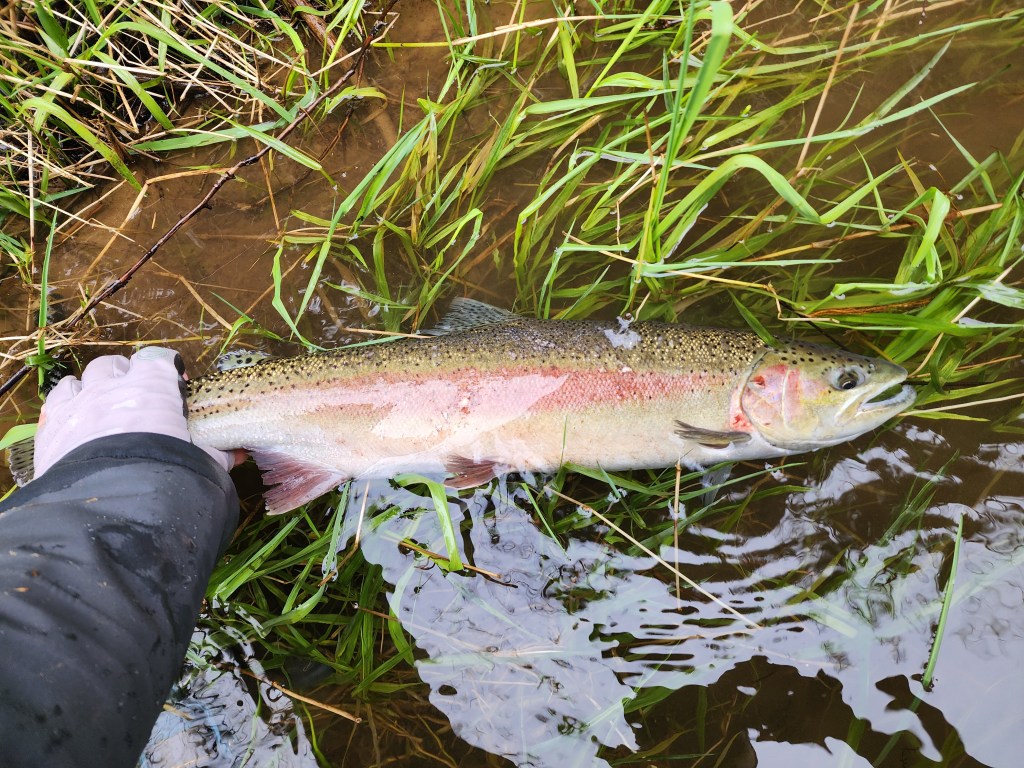
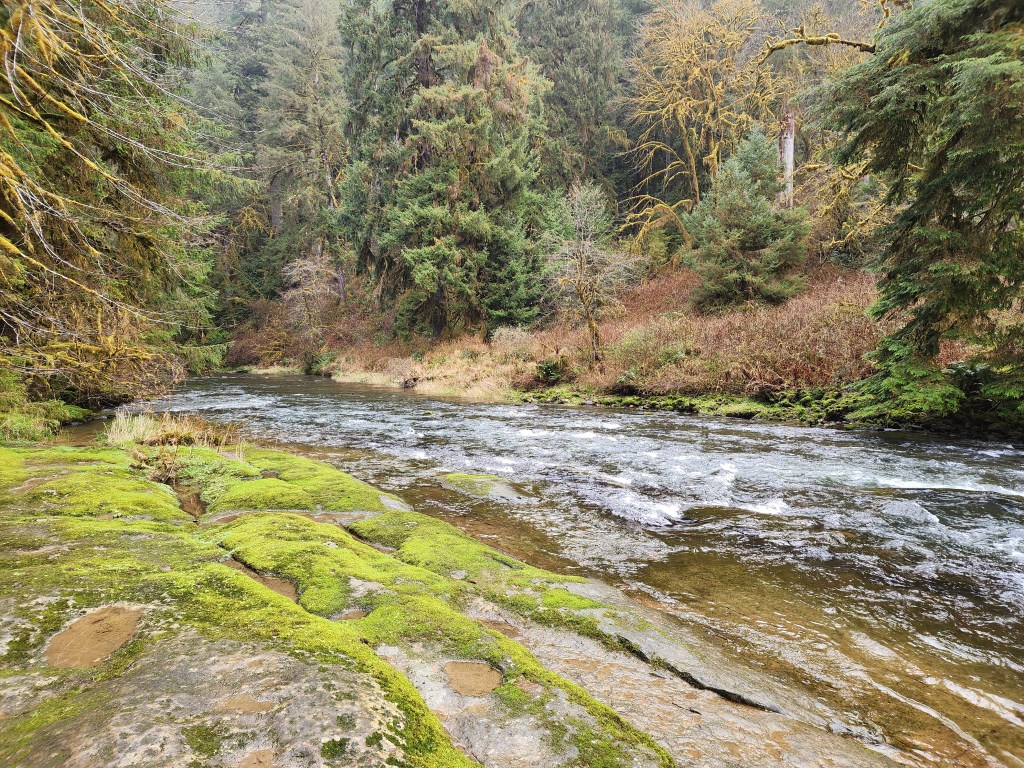
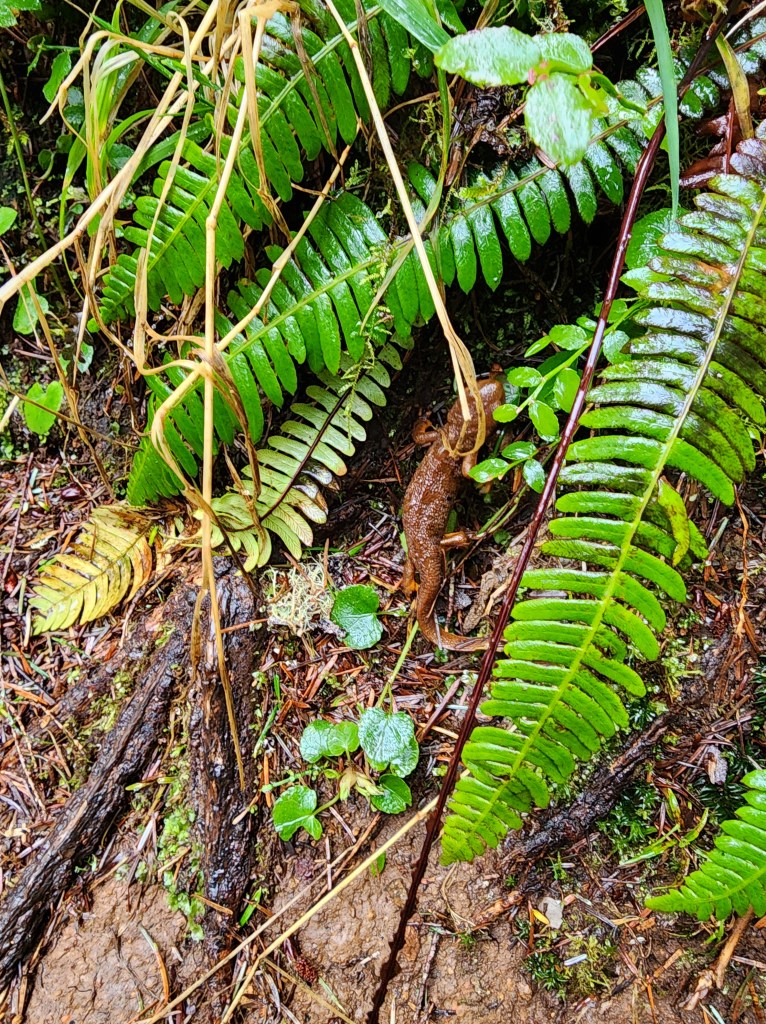
One of my goals this winter has been to spend time on the Oregon coast steelhead fishing. Last night I returned from another trip. Exploring places I have not been before, driving down one lane dirt roads, taking long hikes through the forest in waders to streams without other anglers, catching steelhead, and seeing critters I don’t normally see is all good. On the other hand, while there I am constantly reminded how great it is to live in Central Oregon. It’s pretty hard to beat living around here, at least until this summer when we are all choking on smoke again.
It’s time for bull trout

My friend Scott and I had a five hour session on Lake Billy Chinook today. We hooked seven of them. Nothing of any real size, the big one was this fish I measured at 18″, but it was fun. The water was 40 degrees, so still a bit cold, but it’s time to get out there.
“Rising Rivers”
As readers of this blog know, I have mixed feelings about hatcheries. Ideally, they would not exist, but we do not live in an ideal world. Seth White, the director of the Oregon Hatchery Research Center, has stared a new Substack (the modern version of a blog) with this announcement: “I recently decided to join the longstanding tradition of academics writing about their research and personal views for lay audiences. I created a Substack called Rising Rivers and the debut article is titled Abundant rivers: What role can hatcheries play in recovering harvestable salmon abundance while protecting wild populations?” I don’t know where he is going with this, but I liked the first post and subscribed.
Off topic: wildfire
I am not a wildfire expert but have spent the past five years or so educating myself by reading academic and other research by wildfire experts. It is a fascinating area and the conclusions contradict many of the recommendations from the US Forest Service and pro-logging special interests. The recent furor over the state wildfire maps motivated me to write an opinion column that was published in The Bulletin today.
Steelhead moving up the Crooked
As of two days ago, February 21, roughly 188 steelhead have moved up the Opal Springs fish ladder near the bottom of the Crooked River. 54 of these have also gone back down. I say “roughly” as a few fish have been known to go up the ladder, relatively quickly go back down, and then head back up. So, there could be a little double counting. Others go up, spawn, and then head down. Remember, it is illegal to fish for steelhead above Round Butte Dam.
Read More »Care to weigh in on the ODFW budget?

As you know, at the beginning of every biennium our state legislature establishes the state budget, including ODFW’s. This process is now underway for the 2026-2028 biennium which begins in June. ODFW is facing a serious budget shortfall which will impact anglers and hunters throughout the state. It’s short notice, but an important hearing on a couple of bills will occur on Monday and you can provide input before next Wednesday at 8 am. I’ll provide context and a method of expressing your opinion below but you need to take action soon.
Read More »This week’s ODFW commission meetings
The ODFW commission had a couple of presentations this week that I found interesting. The first was on a chemical (6PPD which turns into 6PPD-q) that comes from tires, washes off roads into waterways, and kills salmonids, particularly coho salmon. You can watch a recording of that presentation here. It begins around minute 27 and lasts a little over an hour. The discussion after the presentation was valuable as well. The over simplified summary is that this is a serious problem and while research has been done more is needed. There are some promising potential solutions but individually they are not comprehensive, implementing a truly comprehensive solution would be expensive, and take decades to effect statewide. This is a big and complex problem. Let’s hope that funding for all the agencies and groups working on this continues.
Read More »Lower Crooked River flows protected
UPDATE: A reader alerted me to the fact that I made a glaring error in this post. I used the abbreviation BLM (Bureau of Land Management) when I meant to use BoR (Bureau of Reclamation). Mea culpa. Sometimes I need an editor.
Yesterday I received a personal email from Advocates for the West stating that “on February 10, the Crook County Circuit Court rejected several ranchers’ attempt to invalidate a water right issued by the Oregon Water Resources Department (“OWRD”) to protect flows for fish and wildlife in the lower Crooked River.” This was in response to legal action by Advocates on behalf of WaterWatch. I’ll provide some background, but the bottom line is that flows that should have been protected for over a decade below the Wild & Scenic section will now be protected all the way to Lake Billy Chinook. I assume that Advocates and Waterwatch will publicize this soon, but here’s an early preview.
Read More »Crooked River flows and forecast, UPDATED
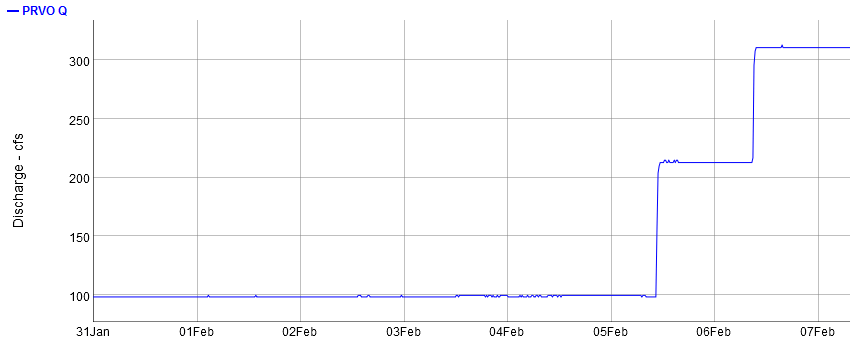
UPDATE: This morning I thought woke up thinking about the written comment from BoR, “Moving into La Nina trends, which could mean a warmer and wetter winter for Central Oregon”, which I repeated in the post below. So, I looked to NOAA which stated that a La Nina typically makes Oregon cooler and wetter. Go figure. Regardless, the Crooked River should be high for some time.

ORIGINAL POST: You may have already seen this chart showing the recent increase in flows out of Prineville Reservoir into the Crooked River. I took a look after receiving the notes this morning from the monthly water operations call that occurred two days ago (Feb. 5). You should expect high flows for some time. The Ochocos are experiencing an above average snow year. As a result, while Prineville Reservoir is 57% full as of this morning, it does not have remaining storage capacity to accept what is anticipated to be a large amount of runoff (perhaps 300% of normal) when temperatures increase in the spring or from a rain on snow event. The notes also point out that a developing La Nina could bring warmer temperatures and precipitation as rain. As a result, outflows into the Crooked River could be high for “extended” periods, likely for months. This is bad news for fishing this winter but good news for summer fishing and good news for the record number of steelhead that are currently attempting to make their way up the Crooked River.
Salmon and steelhead “holding steady”?
Last December, the Northwest Power and Conservation Council issued a report stating that salmon and steelhead returns were “holding steady” in the Columbia River. A couple of news outlets covered this report and I pointed out issues with both of them here. The primary problem is that hatchery and wild fish were not separately counted and increased returns compared to the 1990s are due to increased hatchery production. Oregon Public Broadcasting recently reprinted an article from Underscore Native News on the same topic making the same omissions. Nevertheless, I found the article worthwhile as it reflects the troubling stance of Columbia Basin tribes, including the Confederate Tribes of Warm Springs, on hatcheries. I wrote some thoughts about this here. Increased hatchery production, as being pursued by many tribes in Oregon, will not recover wild fish. The science on this is clear. Hatcheries absolutely have a role to play but they do not lead to “restoration”.
Spencer Creek video
I acknowledge that I been posting a lot about Klamath Basin stuff lately, but I recently came across this short video of salmon spawning in Spencer Creek. It’s so great to see. Spencer Creek is in Oregon, it meets the Klamath River just above where the J.C. Boyle Dam used to be, a little below Keno. I have been told that hundreds of salmon were counted in Spencer Creek last fall and early winter.
Satellite photo of flooded area

I know most readers are not as interested in the Klamath Basin as I am, but I wanted to share this satellite photo which was sent to me and which I have annotated. It looks like approximately half the total project area is now under water. Read more about this here.
Interesting news for Agency Lake anglers
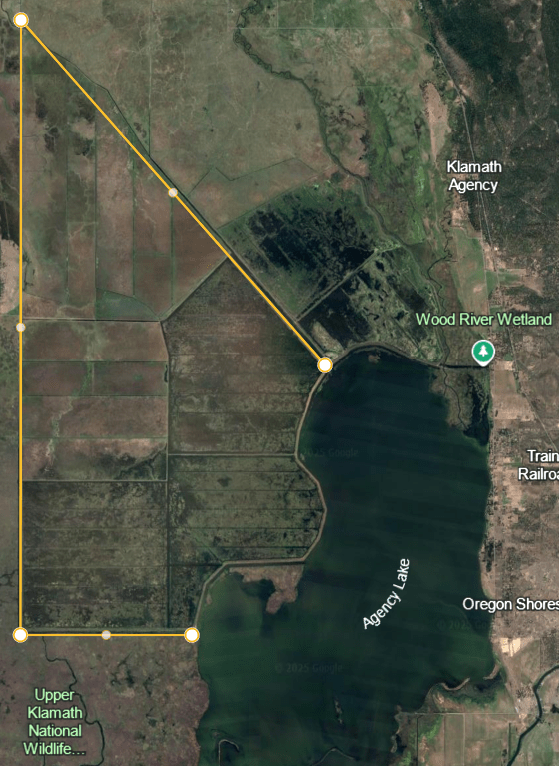
This post has been updated. See the end of the post.
Oregon Public Broadcasting recently reported that portions of a levee defining the west side of Agency Lake have been removed, creating significant new aquatic habitat. I used Google Earth to create the image on the left, the entire area inside the yellow lines will eventually be under water.
I have failed in my attempts to talk to someone directly involved with this project, so the rest of this post is based on the OPB article and my understanding of this area where I have spent a lot of time over the years. There are clear benefits for waterfowl and sucker fish. Any benefits for trout are less obvious.
Read More »Upper Rogue River jet boat ban
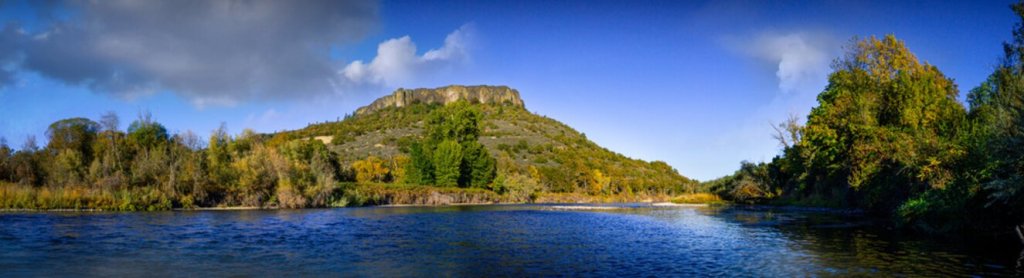
I have been posting a little about Rogue Riverkeeper’s attempts to ban jet boats in the Upper Rogue River above Table Rock Road. A few days ago they announced victory. As someone who likes to float and fish for steelhead around Shady Cove (Lost Creek Dam to Dodge Bridge) I am happy with this outcome. Thank you if you submitted a letter in support for this action.
Fish passage at Mirror Pond Dam?
The Bulletin had a good article with an update on the decade long discussion of providing fish passage at the PacfiCorp owned dam that creates Mirror Pond. Funding has been secured to design something that mimics a natural passageway but construction has not been approved and funding would need to be raised. An engineering design is a welcome step forward but there’s still a long way to go and some important questions that need to be answered. For instance, the current thought is to provide safe upstream passage only. Of course, safe downstream passage is also needed to allow for the natural migration of resident fish. Nevertheless, this could be good news for the Middle Deschutes.
“What time is it?”
Jason Zweig is my favorite columnist at the Wall Street Journal. Today he referred to a 1972 book by George Goodman (aka Adam Smith) titled “Supermoney”. It contained this paragraph:
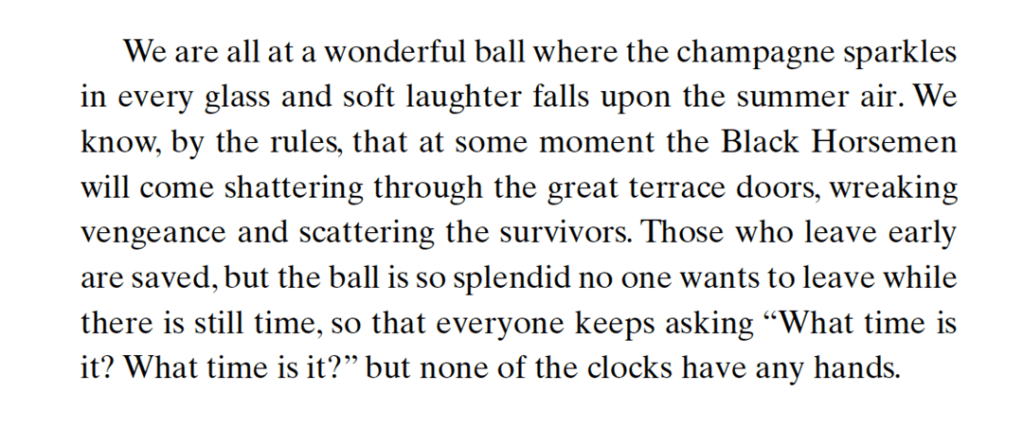
Jason quoted this passage in reference to the current US stock market, but after yesterday’s presidential orders designed to dismantle attempts to fight global warming I think it is applicable there as well. We are all at a huge party, we all know it will end, but no one knows exactly when. Unfortunately, unlike the stock market, there is no way to leave this party early. The Black Horseman will come for all of us.
No commitment to increased flows
The Bulletin reported today that the Deschutes Soil and Water Conservation District was awarded $509,992 of taxpayer money for unspecified enhancement projects. This is on top of the recent tax increase approved by Deschutes County voters for unspecified DSWC projects, a tax increase I argued against. The problem is that no commitment has been made by DSWC to increase flows in the Deschutes River from piping private canals or installing sprinkler systems. It appears that saved water will be retained by the landowner for their private use. On-farm water efficiency projects are important, but if taxpayers are subsidizing improvements on private land there should be public benefit.
Steelhead season continues…
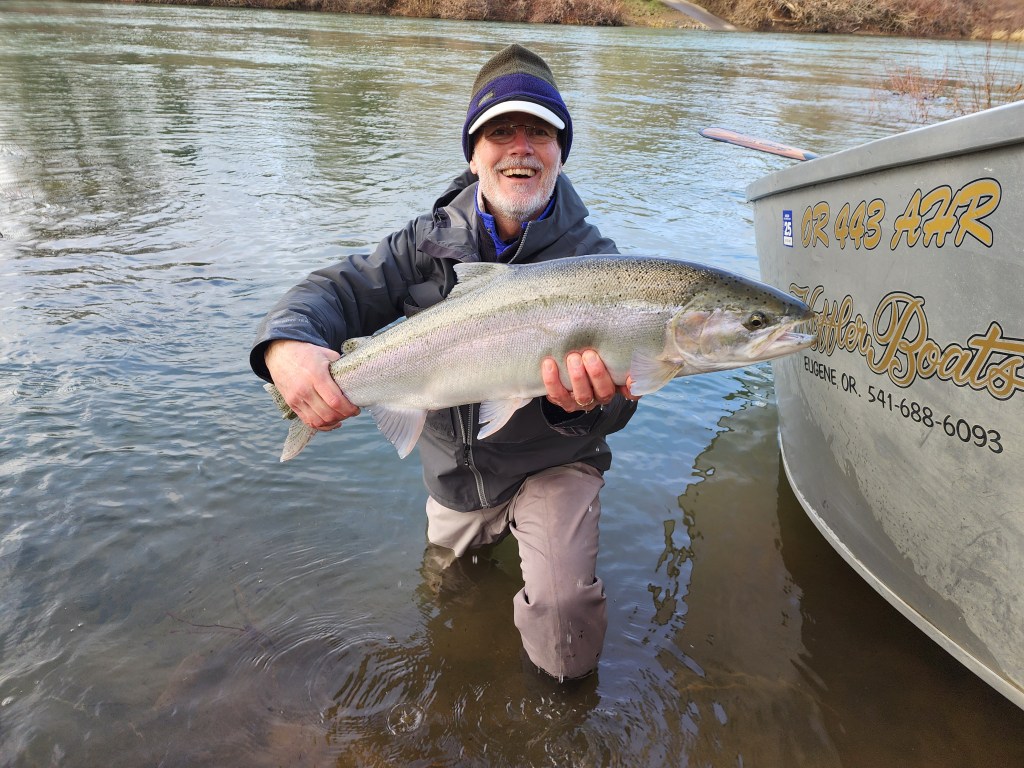
It looks like the good summer steelhead run is continuing to winter steelhead season. Got three of these last Friday on the North Umpqua below Winchester. Pretty fun on a single hand 7wt rod. Now that I am mostly retired I plan to spend as much time as possible on the other side of the Cascades for the next few months.
Off topic, but important for Central Oregon
My friend George Wuerthner writes frequently about wildfires. His central position is that forest logging (“thinning”) is detrimental to forest ecosystems and can increase the probability of destructive, large scale wildfires. Other actions are more important to protect communities. Of course, this is not intuitive and is not the commonly held opinion. It’s a complicated subject but yesterday he posted this article which provides an overview of some of his research. It is not a question of if, only when, a large scale, wind-driven fire impacts homes in Central Oregon but homeowners, building codes, and land use can make a difference. I have spent a lot of time over the past few years increasing the fire resiliency of my home, efforts that are continuing.
Deschutes steelhead update
PGE has updated their daily fish count spreadsheet which now has steelhead returns through December 31. The 2024/2025 steelhead return numbers continue to be the best in decades, but there are caveats. So far, 1,654 hatchery, 91 wild, 3 RM, and 562 LM fish have been captured in the Pelton Trap below the reregulating dam. A total of 734 steelhead have been passed into the Upper Basin. These are RM, LM, and excess hatchery. Please see this post from November for an explanation of what this means and some commentary. These are very good numbers but the glaring issue is the total of only 3 RM fish, the same count as in my November post. These are fish that the reintroduction effort was intended to create, fish naturally spawned above the dams.
Jet boats on the Upper Rogue River
This is not a Central Oregon issue but if you like to fish the Rogue River around Shady Cove as much as I do, please keep reading. If you have ever fished this part of the Rogue then you may have encountered a jet boat creating a dangerous wake if you are standing in the river or floating in your drift boat or pontoon. Rogue Riverkeeper is attempting to ban all boats over 10 HP in the Upper Rogue above Fishers Ferry County Park, which make sense to me as an angler. There will still be plenty of river for high powered boats. Further, why ban all boats at rarely occurring very low flows? How is a pontoon boat a problem? Check out this blog post from Rogue Riverkeeper and click on their “take action” link to send a letter. (Yes, I wrote about this some time ago, but more comments are needed now on the final proposed regulations from the Oregon State Marine Board.)
“Beneath the Surface”
As readers of this blog know, I have been writing about declining groundwater levels in the Deschutes Basin for many years as well as the recent and overdue work by the Oregon Water Resources Department to address it (see the groundwater section if you want to dive in). You also know that groundwater and surface water are “hydrologically connected”. In other words, declining groundwater lowers stream flows which impacts fish, wildlife, and recreation. If you are new to the blog, or have been skipping over the years of posts on the subject, the Deschutes River Conservancy recently held a brief seminar that went over some highlights of local hydrology, the new rules for obtaining groundwater permits, and consumption of water by city and rural water users. If you want a quick overview the replay is worth watching.
The seminar did omit a couple of very important points, however, that I have written about. One is that the primary reason local groundwater levels are declining is due to global warming (less recharge from precipitation and higher rates of evapotranspiration), not increased groundwater pumping. Even with the touted Deschutes Basin Mitigation program in place, many stream levels are dropping. (The exception is the Upper Deschutes due to requirements in the Deschutes Basin Habitat Conservation Plan.) Also, the new groundwater permit rules will do nothing to address the current declines in groundwater levels. At best, they will slow the continued rate of decline.
The last day on the Lower D for a while

My tradition is to fish the Lower Deschutes on December 31st, closing day. It has typically been a good outing as there is little angling pressure. This year I only had a half day and I walked down from Mecca. I quickly remembered why I don’t do that, where did all those people come from? I did not find a steelhead, but I did land this bull trout, and it was a pretty sunrise.
Read More »High flows on the Crooked

For years, Central Oregon Flyfishers had an outing to the Crooked River on January 1st to start the New Year. That tradition has gone by the wayside, but I thought about heading out there and looked at the flows. They have ramped up dramatically out of Prineville Reservoir. Not good for fishing, but good for the record numbers of returning steelhead. The reservoir is already 60% full and there’s good early season snowpack in the Ochoco’s, so the reservoir already has to be lowered just in case there’s a big rain-on-snow or other melt event. The Bureau of Reclamation is concerned about early, high runoffs this spring as recent fires have reduced tree cover over the snow which could lead to quicker than normal snow melt. Global warming marches on. BTW, Wickiup is 55% full but releases are steady at just over 100cfs.
Chrome bright steelhead
This fish went up the Opal Springs ladder five days ago. I am surprised by how bright it is this late in the season. The return numbers continue to be exceptional this year, with a couple of traditionally good months to go. I’ll provide an update on the numbers in early January, the final count won’t be known until the end of April. Steelhead are amazing fish. Remember, it is illegal to fish for steelhead above the Pelton Round Butte dams.
The “first law of holes”
Today the NY Times has an article on the nascent attempts to remove carbon form the atmosphere. Al Gore summed his opinion up nicely. “We need to obey the first law of holes. When you’re in one, stop digging.” A priceless observation that applies to so many endeavors, including local water issues. He was referring to the fact that we should focus on reducing carbon emissions rather than hope for technologies that will allow us to continue to increase them. Another inconvenient truth.
Willamette Week article on the Lower Deschutes
As readers of this blog know, I am a longtime critic of the Deschutes River Alliance, whom I like to refer to as the “tin foil hat crowd”. I have dozens of posts over many years rebutting their unproven and unsound claims. Their current executive director is an excellent marketer, however, and she has once again proven that by getting Willamette Week to write an unbalanced and poorly researched article that repeats the DRA’s claims. (This story was reprinted in The Source Weekly.)
There was no word of government agency analyses or independent scientists or discussion of the many studies that disprove the DRA’s claims. There was no mention of the many environmental NGOs who do not agree with the DRA. There was no discussion of the studies of the impact of the SWW operation on fish health, or the new study on fish health being conducted. There was no discussion of the impact of global warming on the river. Etc., etc., etc. It was a truly one-sided article. I could go on in depth, but it’s just the same old story from the DRA being repeated by a manipulated and apparently biased reporter. Of course, this article will have no impact at all on the operation of the PRB complex. The agencies in charge have stopped listening to the DRA, after many attempts to work with them, but the article will help keep donations to the DRA coming in. After all, salaries need to be paid.
COLW steelhead article
I am a supporter of Central Oregon LandWatch. They do great work in Central Oregon in many areas and since Tod Heisler became affiliated with them have become an important voice in local water issues. Over the past few months they have written a series on steelhead which is generally informative (see past posts for some comments). The final installment was recently released, which I appreciate but, of course, have comments. The final installment revisits the shortcomings in the Deschutes Basin Habitat Conservation Plan, which I discussed extensively years ago, but there is value revisiting them and I applaud COLW for continuing this discussion. Unfortunately, the article attempts to make too strong a connection between irrigation withdrawals and the success, or lack thereof, of reintroducing steelhead into the Upper Basin. Paradoxically, they make no mention of spring chinook or sockeye, the other two anadromous species that are impacted by the Pelton Round Butte dam complex.
Read More »Columbia Basin salmon and steelhead returns holding steady?
A couple of press articles recently came out claiming that salmon and steelhead returns in the Columbia Basin have held steady over the past 10 years. Both stories acknowledge that returns are far lower than historical numbers but state they are an improvement from the 1990s. The data is from the Northwest Power and Conservation Council, a group that works with the Bonneville Power Administration to “ensure, with public participation, an affordable and reliable energy system while enhancing fish and wildlife in the Columbia River Basin.” Of course, federal courts have ruled repeatedly that the BPA is not doing enough to recover wild fish and is primarily focused on the delivery of power.
Read More »“A Potentially Tough Year Coming for Pacific Salmon”

I hope you have been having a good steelhead season on the Lower Deschutes. I certainly have. Things might not be as good next year. NOAA Fisheries recently sent out a report that contains the heading “A Potentially Tough Year Coming for Pacific Salmon”. Last year, “wind-driven upwelling delivered cooler-than-average ocean temperatures, and higher-than-average biomass of lipid-rich copepods.” In other words, a rich food web. Unfortunately, NOAA states that they are seeing “mixed signals” about 2025.
Middle Deschutes killed again

This is yet another in a long string of posts over the years about the lethal mismanagement of the Middle Deschutes by the irrigation districts. I’m tired of this subject and I’m sure readers are as well, but improvement has not occurred and this ongoing ecological disaster needs to be documented. The graph above shows flows in the Middle Deschutes just below the North Canal Dam near the Mt. Washington Drive bridge. The blue line shows flows this water year.
Read More »Geeky: hatchboxes
Yesterday, the Oregon Hatchery Research Center and Oregon State University held a day-long seminar on “hatchboxes” (yes, it seems to be one word). Broadly, a hatchbox is any type of device where fertilized fish eggs can be placed in a river or stream, or right next to it, and be protected at least somewhat until the fry are ready to live in the river. Speakers from academia, government agencies, and tribes discussed their experience with hatchboxes, their pros and cons, and applicability versus traditional hatcheries. I was invited to attend as a board member of the OHRC. I have heard anglers who target coastal anadromous fish advocate for the use of hatchboxes as a way to make up for the loss of natural spawning grounds and was interested in what the science tells us so I made the day trip to Corvallis.
Read More »“Salmon without a river”
The current issue of The Osprey has an excellent article that all wild fish supporters should read. While the title is unwieldy, “Reflections of American Conservation and Economic History in Relation to Wild Salmon and Steelhead”, the contents are well written and expansive hitting on many of the topics I like to cover. I’ll give a very brief summary, little more than a teaser, and encourage you to read it yourself. It begins on page 16. Of course, if you love wild salmonids you should subscribe to this free publication and make a donation to support it. As an aside, I really dislike the way the issue is displayed on their website, but you can download it as a PDF for much easier reading.
Read More »Early steelhead numbers above PRB
Yesterday Portland General Electric and the Confederated Tribes of Warm Spring, co-owners of the Pelton Round Butte hydroelectric project, issued a press release stating that record numbers of steelhead have already returned to the Pelton Trap below PRB and have been transported into the Upper Basin above Lake Billy Chinook with most of the return year still ahead. This news has already been covered in The Bulletin and Cascade Business News. As usual, these stories lacked nuance and did not adequately explain what is happening. Make no mistake, I am a strong supporter of the effort to reintroduce anadromous fish into the Upper Deschutes Basin, but the news, while good, is not quite as good as what has been reported.
Read More »Steelhead are already moving up the Crooked
Video from the Opal Springs fish ladder. Only a few so far, but they are arriving. There is a decent chance this will be the best return year to the Upper Basin so far. Hopefully they will spawn. Please don’t try to catch them. Even the best catch and release practices lead to some mortality and lower spawning rates. Stay on the Lower Deschutes.
Court order on N. Umpqua summer steelhead
On October 30th a judge denied a request to order ODFW to continue to release summer steelhead into the North Umpqua river. This is a long saga that I’ll summarize below, but it appears that the ODFW Commission’s April 2022 decision to stop these hatchery releases may finally be implemented, at least until the next legal maneuver. Here’s a blog post from The Conservation Angler with the announcement. Keeping reading for some background.
Read More » Central Oregon Informed Angler