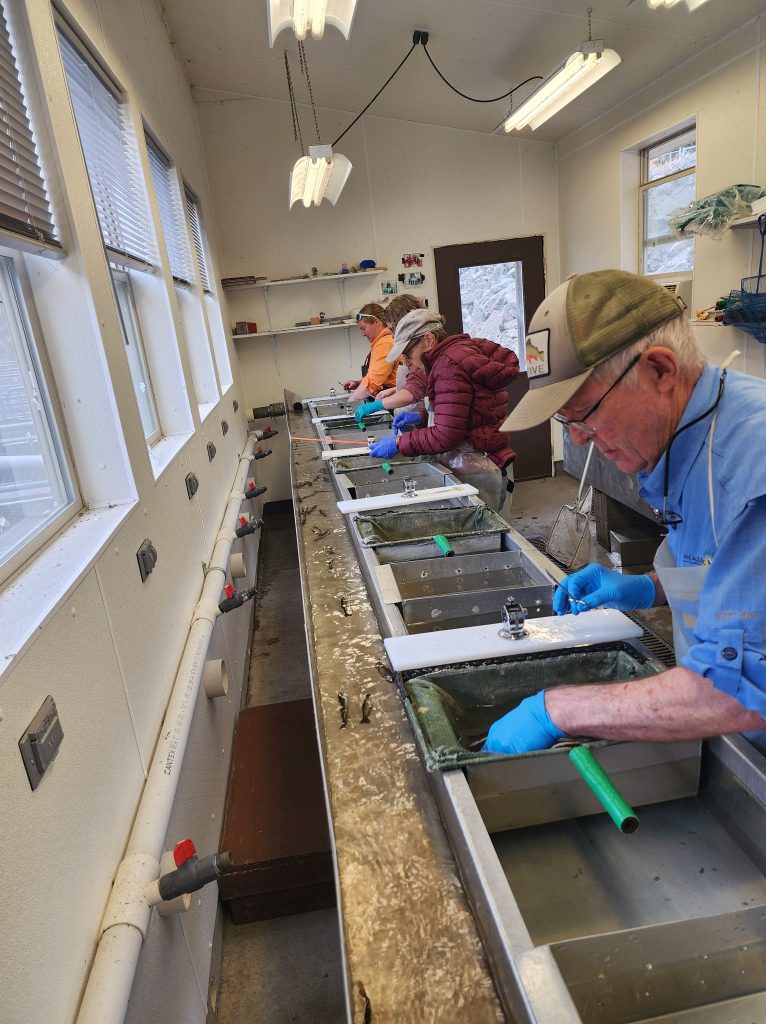
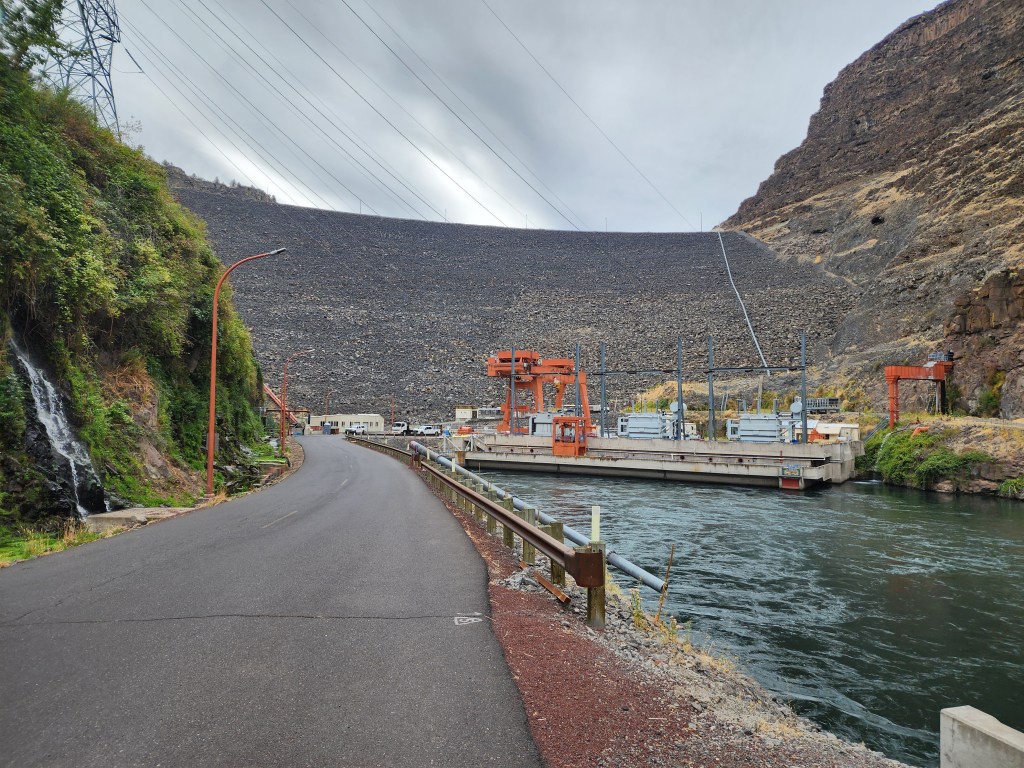
Last Thursday I spent half a day helping to clip the left maxillary of juvenile hatchery steelhead being raised as part of the reintroduction program. I had never done this before and was curious about the process as well as seeing the Round Butte Hatchery up close. The hatchery is behind the red crane at the base of Round Butte Dam in the photo below. Lake Billy Chinook is on the other side of the dam, water released from the reservoir emerges at the bottom of the concrete platform in the foreground.
(Note: when I first posted this I had a brain fart and stated that we were clipping the fish’s mandible not maxillary. As I have said before, sometimes I need an editor. Thanks to a reader for pointing this out.)
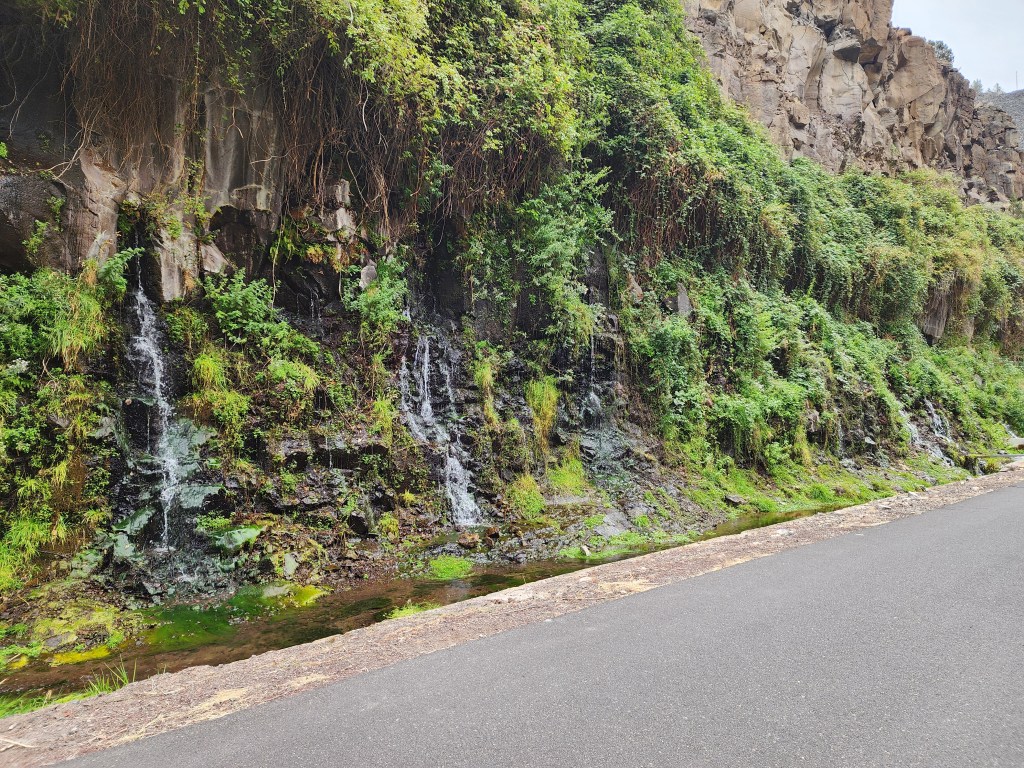
There’s a significant amount of water seepage along the canyon wall heading to the hatchery.
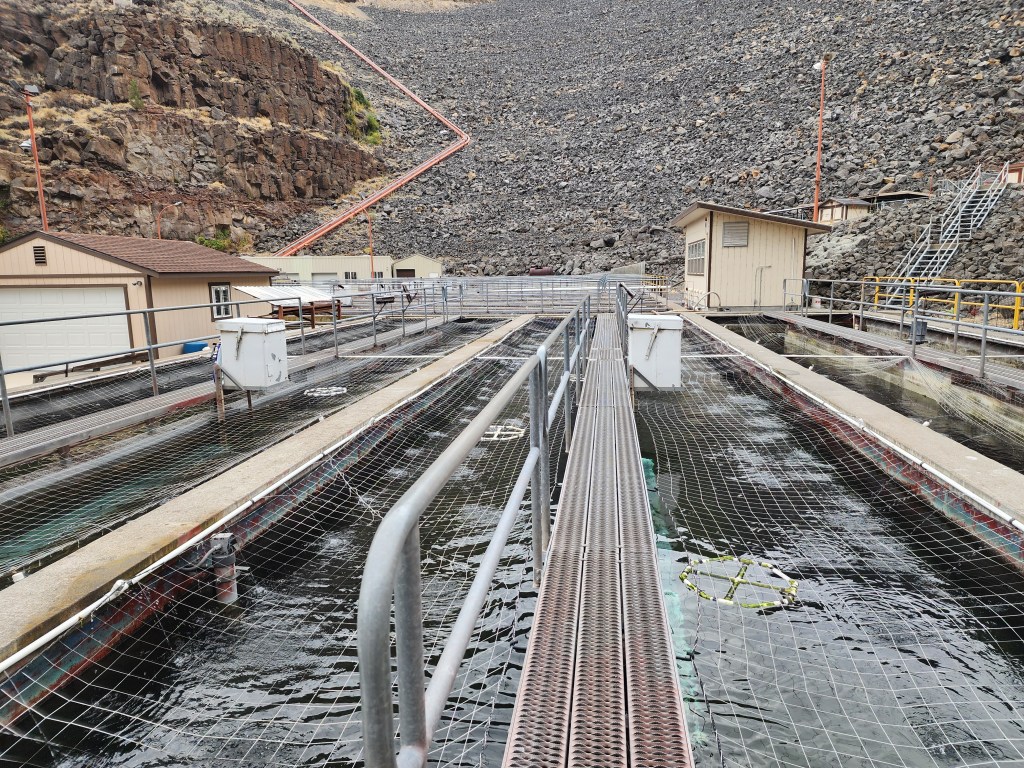
Round Butte Hatchery is fairly small, the raceways are below.
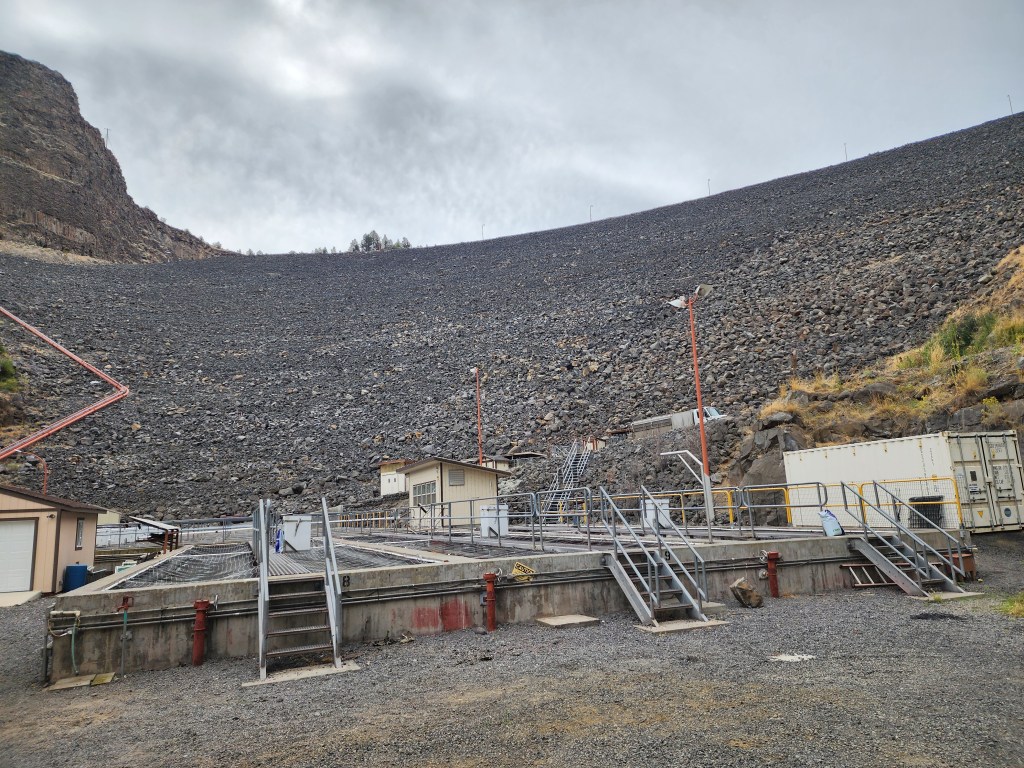
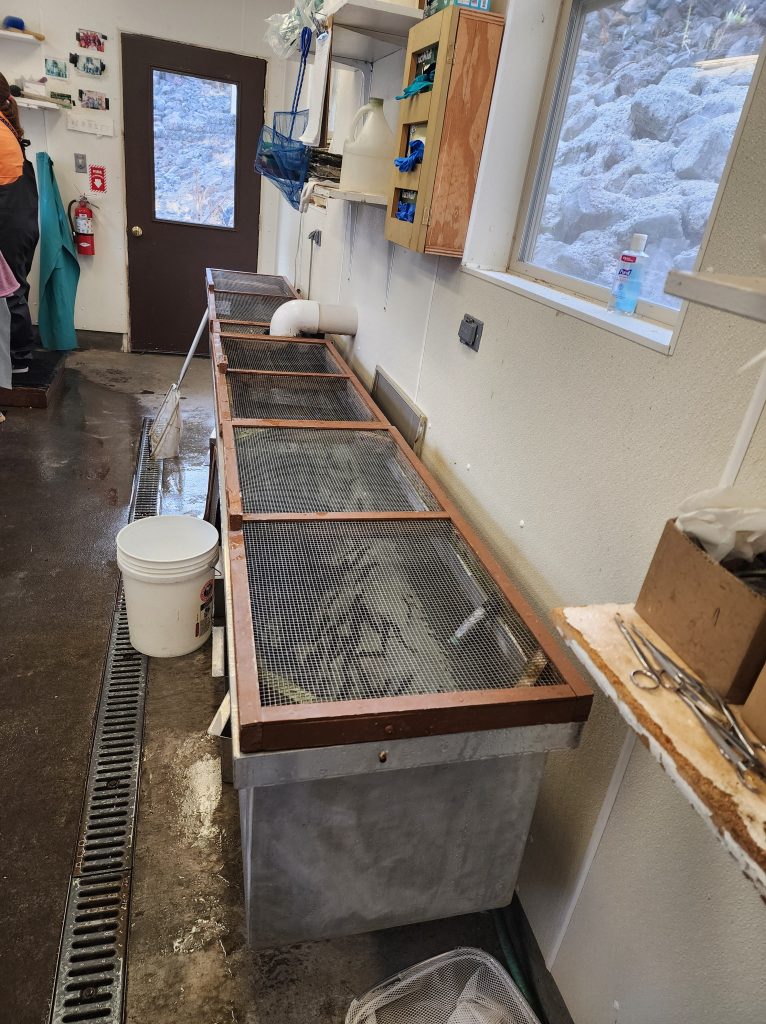
Fish were moved from one of the raceways into the small holding pen below.
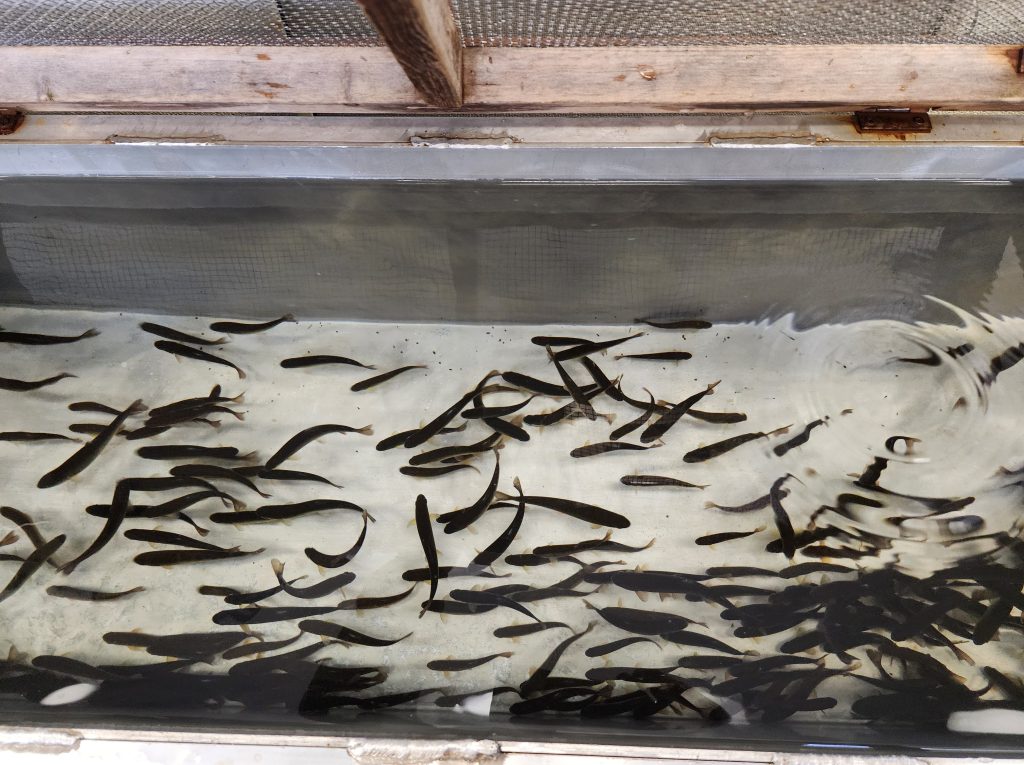
Here are the fish in the holding pen. As you can see they are pretty small, anywhere from 1.5″ to maybe 4″. You may wonder about this since maxillary clipping is typically done on much larger smolts prior to their release. These fish had to be moved out of their raceway sooner than normal to make room for other fish. The decision was made to mark and move them to the Crooked River where they have some chance of completing a steelhead’s life cycle rather than release them into a contained water body like Haystack Reservoir.
Volunteers netted a small number of fish at a time and transferred them into the tray below where they were anesthetized to make the process of clipping their left maxillary easier. Once clipped, the fish were placed into the trough where they revived and swam down a pipe to an exterior tank. Those fish were then loaded into a transfer truck before being driven to Big Bend on the Crooked River where they were released later that same day.
Hopefully those fish will survive the very low water conditions that will soon be seen in the Crooked, grow to smolt size over the next year, and move out in the spring of 2028. In the meantime, if you catch a trout in the Crooked you might want to check to see if it is missing its left maxillary.