It’s easy to be a critic

For as long as the Selective Water Withdrawal tower has been in operation I have written posts detailing upstream and downstream fish passage. Those posts have documented that efforts to reintroduce anadromous fish into the Upper Deschutes Basin have not met the goals established by the Federal Energy Regulatory Commission for the operation of the Pelton Round Butte hydroelectric project, co-owned by Portland General Electric and the Confederated Tribes of Warm Springs. On multiple occasions I have gone as far as to say that the reintroduction effort has been a failure thus far.

My personal position is that this is terrible but there is no credible science showing that the operation of the SWW has had an adverse impact on Lower Deschutes fisheries. Further, the FERC license requires the continued operation of the SWW, and some reintroduction progress, however slowly, is occuring. Recently a post was made on the Native Fish Society’s blog introducing their new Lower Deschutes River Steward which I found unhelpful. It was critical of the reintroduction effort but did not provide any thoughts about how things could be improved.

Read More »

Bull trout in the Lower Deschutes

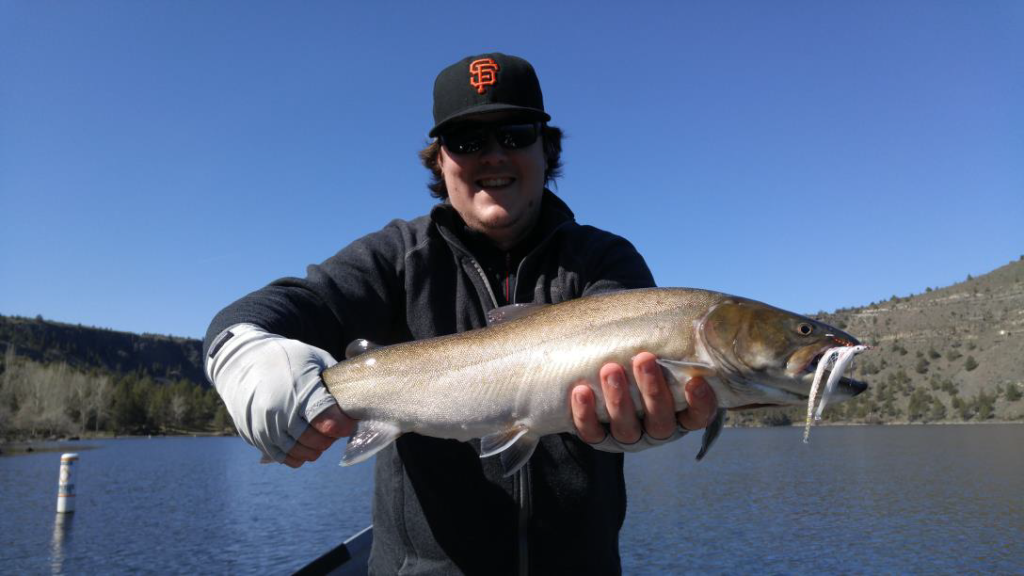
I have been ignoring the drivel that continues to come out of the Deschutes River Alliance, but a local fly shop asked to me to comment on a recent post the DRA made titled “Whatโ€™s Happening With Bull Trout on the Lower Deschutes?“. So, I took a look and, as usual, the tin foil hat crowd is off base. Yes, bull trout are ESA-listed which means that they are managed by the US Fish & Wildlife Service. Not Portland General Electric and not the Oregon Department of Fish & Wildlife. USFWS is the agency that has told Portland General Electric to transport some bull trout from Lake Billy Chinook to the Lower Deschutes. To reiterate, this is not a decision made by PGE and ODFW has nothing to do with it.

Read More »

2025 spring chinook returns

I’m a couple of weeks late posting about this year’s spring chinook returns to the Upper Deschutes Basin as part of the reintroduction program. Some of that is due to being careful to wait until the end of the run and some due to the fact that Portland General Electric has stopped posting the spreadsheet that shows daily counts of fish passed through the facility. As usual, however, they are very responsive and helpful when contacted and I now have the data. It’s mixed news.

Read More »

PGE will change their fish count reporting

After my last post, I was contacted by Portland General Electric and told that prior to the DRA’s post and mine, PGE had decided to include fish counts for both hatchery and naturally raised fish passed into Lake Billy Chinook. I was glad to hear that. I have always found PGE’s fisheries biologists to be open to feedback and dialogue and am appreciative of their efforts. I was told that the changes will be reflected in the August reports on their website and should be available soon.

The DRA is right on this one, plus a comment about Klamath River Dam removal

As readers of this blog know, I am a frequent critic of the Deschutes River Alliance. But, I have to acknowledge the extremely rare occurrence of the DRA getting something correct. As they point out in their latest blog post, Portland General Electric has changed the way in which they report steelhead returns. PGE no longer differentiates between natural origin steelhead and hatchery stock passed above the Pelton Round Butte project. As I wrote about last May, it is disingenuous for PGE to lump these together when reporting total steelhead returns. There is a huge difference between returning fish that were naturally spawned in the Upper Deschutes Basin and those spawned in a hatchery.

Read More »

“Good science and bad science get published all the time”

As you probably already know, last week the Deschutes River Alliance sent out an email announcing the publication of a scientific article, “Water Quality and Biological Response in the Deschutes River, Oregon, Following the Installation of a Selective Water Withdrawal“, which concludes that the Selective Water Withdrawal Tower (SWW) has had a “negative influence” on the Lower Deschutes. Since I don’t trust the DRA (or the tin foil hat crowd as I like to call them), I read the paper a couple of times, had multiple conversations with fish biologists who are intimately familiar with the Lower Deschutes, and had coffee with Joe Eilers, the principal author of the study, who lives in Bend. Not surprisingly, there is much more to this story than portrayed by the DRA. Keep reading for a lengthy discussion but a soundbite summary was provided by one of the fish biologists I spoke to: “good science and bad science get published all the time”. The new paper has elements of both.

Read More »

Spring chinook in Lake Billy Chinook

In preparation for a Lower Deschutes trip next week, my friend Scott needed check out his jet boat. So, we headed to LBC for a few hours early this morning and figured we would do a little kokanee fishing at the mouth of the Metolius. It was a beautiful day and were surprised when Scott hooked into a very big fish. Was it a really big trout? A bull trout? No, it was a spring chinook. He landed it on a 4wt fly rod and 4x tippet! He briefly pulled it out of the water for a photo and then released it. Pretty cool. BTW, there were plenty of kokanee to be had there as well.

2025 Deschutes fisheries workshop summary

Yesterday was the 31st annual Deschutes fisheries workshop. I can’t recall exactly when I started attending these but I think I’ve been to about half of them. I’ll post again when the presentations are made available online, but here’s a summary. The headline is that, once again, real science shows that the Lower Deschutes is in fine shape. Anadromous fish reintroduction has not been a success but it is not negatively impacting the lower river.

Read More »

Deschutes fisheries workshop discussion on parasites

The Deschutes River Alliance recently posted that recent research from Oregon State University showed that juvenile spring chinook salmon in the Deschutes “have experienced significant risk of infection and disease” from the parasite ceratonave shasta. Of course, the DRA blamed the operation of the Selective Water Withdrawal tower in Lake Billy Chinook. The author of the study will be presenting at the upcoming Deschutes Fisheries Workshop and I encourage you to attend to get the data without spin. The workshop is on July 17 and anyone can attend if you register here.

Deschutes steelhead closures

Yesterday ODFW announced angling closures on the lowermost sections of the Deschutes and John Day rivers and Eagle Creek in response to low summer steelhead projections. As a friend emailed to me, “a feeble attempt to give the fish a thermal refuge. ODFW should just close the Columbia system for 4 years instead of trying to rehab stocks with band aids and duct tape”. That’s a rational thought. After last year’s good returns I certainly was looking forward to steelheading this season but knew that the good ocean conditions that lead to those returns were most likely an aberration on a generally worsening trend. Global warming marches on and our government is contributing to its acceleration.

2025 fisheries workshop

For over three decades Portland General Electric has held an annual “workshop” that discusses the health of the Lower Deschutes River and related topics. Presentations are from a variety of biologists from a range of agencies. If you wanted to hear real, peer-reviewed science about the lower river I suggest you attend. Here’s a link to the registration form. I have been going for many years and have found it invaluable, here’s my post summarizing last year’s workshop.

2024-2025 Deschutes steelhead reintroduction final

The end of April concludes the 2024-2025 steelhead year on the Deschutes River. Portland General Electric still has not updated their Deschutes fish count spreadsheet on their website, but I had an email exchange with a biologist and manager in their fisheries department and received the info I needed for this post. I have written a little on this topic recently (see here and here), so this post will primarily be updates followed by some related commentary. 968 steelhead were mostly passed into Lake Billy Chinook (some were released directly into a tributary of LBC), smashing the previous record. This is great news, but, as I have mentioned in prior posts, this is not quite as good as it looks on the surface.

Read More »

Raise the Deschutes seminar recording

The Deschutes River Conservancy has an ongoing seminar series called Raise the Deschutes. I have been critical of the spin and omissions in most of them, but their most recent one titled “Fish, Flows, and the Future: Conservation and Management in the Deschutes Basin” is pretty good. Fish biologists from the US Forest Service and Portland General Electric provide a good overview of restoration work and fish status for resident fish and the anadromous fish reintroduction program. The target audience is people who have limited if any knowledge of the topic but there were some interesting tidbits and updates in there even for people who have been immersed in the topic for a long time. It was long, but worth watching. OK, I do have a criticism: there was no discussion of habitat or resident fish health in the Middle Deschutes.

Some comments on steelhead reintroduction

For counting purposes, the 2024-2025 steelhead season on the Lower Deschutes ends on April 30 and I will post final numbers and needed explanation after that. There will likely be more fish moving up into Upper Deschutes Basin tributaries from Lake Billy Chinook through May. (This recent post is a bit of a preview.) I have been talking to folks about the program recently, however, and have a few comments to make now.ย  As readers of this blog know, this year has been positive for the reintroduction program.ย  Many steelhead redds have been spotted in various upper basin tributaries so perhaps naturally spawned fish will be a non-trivial part of the returns in a few years.ย  Whatโ€™s troubling is the ongoing lack of management of the Crooked River for steelhead as well as many steelhead moving up the Metolius River.

Read More »

Another misleading post from the DRA

The Deschutes River Alliance recently made a post about the steelhead reintroduction program that, true to form, had some accurate statements which were followed by misleading and unsupported claims. It is true that somewhere around 30%, to up to 40% in some years, of reintroduced steelhead smolts are “direct release”, not released into a tributary of Lake Billy Chinook. As usual, however, the story is more complicated and nuanced than told by the DRA.

Read More »

Bulletin article on steelhead returns

I’ve been putting off writing about Deschutes steelhead returns as there are still almost two months left in the 2024/2025 season, and a good discussion should include where the fish in the Upper Basin have been detected, but the Bulletin ran a story that, as usual, needs some comment. Clearly, the number of adult steelhead that have been passed into Lake Billy Chinook is far in excess of any other return year. But, the story is more complicated than portrayed in the article.

Read More »

Steelhead moving up the Crooked

As of two days ago, February 21, roughly 188 steelhead have moved up the Opal Springs fish ladder near the bottom of the Crooked River. 54 of these have also gone back down. I say “roughly” as a few fish have been known to go up the ladder, relatively quickly go back down, and then head back up. So, there could be a little double counting. Others go up, spawn, and then head down. Remember, it is illegal to fish for steelhead above Round Butte Dam.

Read More »

Lower Crooked River flows protected

UPDATE: A reader alerted me to the fact that I made a glaring error in this post. I used the abbreviation BLM (Bureau of Land Management) when I meant to use BoR (Bureau of Reclamation). Mea culpa. Sometimes I need an editor.

Yesterday I received a personal email from Advocates for the West stating that “on February 10, the Crook County Circuit Court rejected several ranchers’ attempt to invalidate a water right issued by the Oregon Water Resources Department (“OWRD”) to protect flows for fish and wildlife in the lower Crooked River.” This was in response to legal action by Advocates on behalf of WaterWatch. I’ll provide some background, but the bottom line is that flows that should have been protected for over a decade below the Wild & Scenic section will now be protected all the way to Lake Billy Chinook. I assume that Advocates and Waterwatch will publicize this soon, but here’s an early preview.

Read More »

Salmon and steelhead “holding steady”?

Last December, the Northwest Power and Conservation Council issued a report stating that salmon and steelhead returns were “holding steady” in the Columbia River. A couple of news outlets covered this report and I pointed out issues with both of them here. The primary problem is that hatchery and wild fish were not separately counted and increased returns compared to the 1990s are due to increased hatchery production. Oregon Public Broadcasting recently reprinted an article from Underscore Native News on the same topic making the same omissions. Nevertheless, I found the article worthwhile as it reflects the troubling stance of Columbia Basin tribes, including the Confederate Tribes of Warm Springs, on hatcheries. I wrote some thoughts about this here. Increased hatchery production, as being pursued by many tribes in Oregon, will not recover wild fish. The science on this is clear. Hatcheries absolutely have a role to play but they do not lead to “restoration”.

Deschutes steelhead update

PGE has updated their daily fish count spreadsheet which now has steelhead returns through December 31. The 2024/2025 steelhead return numbers continue to be the best in decades, but there are caveats. So far, 1,654 hatchery, 91 wild, 3 RM, and 562 LM fish have been captured in the Pelton Trap below the reregulating dam. A total of 734 steelhead have been passed into the Upper Basin. These are RM, LM, and excess hatchery. Please see this post from November for an explanation of what this means and some commentary. These are very good numbers but the glaring issue is the total of only 3 RM fish, the same count as in my November post. These are fish that the reintroduction effort was intended to create, fish naturally spawned above the dams.

High flows on the Crooked

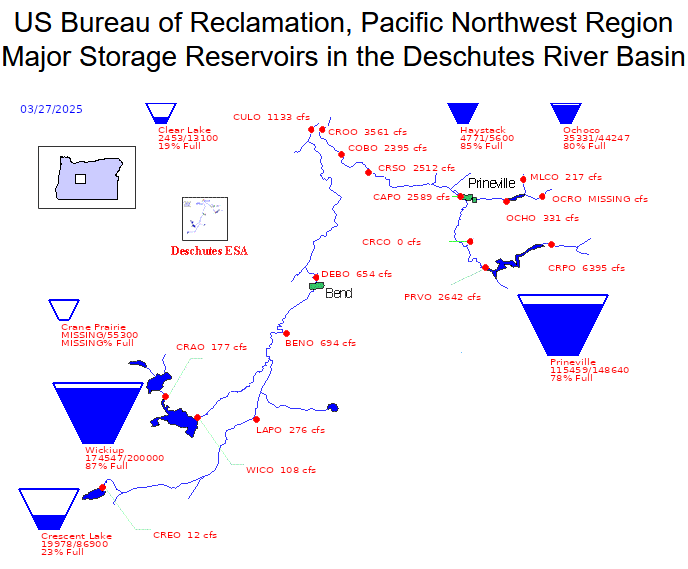
For years, Central Oregon Flyfishers had an outing to the Crooked River on January 1st to start the New Year. That tradition has gone by the wayside, but I thought about heading out there and looked at the flows. They have ramped up dramatically out of Prineville Reservoir. Not good for fishing, but good for the record numbers of returning steelhead. The reservoir is already 60% full and there’s good early season snowpack in the Ochoco’s, so the reservoir already has to be lowered just in case there’s a big rain-on-snow or other melt event. The Bureau of Reclamation is concerned about early, high runoffs this spring as recent fires have reduced tree cover over the snow which could lead to quicker than normal snow melt. Global warming marches on. BTW, Wickiup is 55% full but releases are steady at just over 100cfs.

Chrome bright steelhead

This fish went up the Opal Springs ladder five days ago. I am surprised by how bright it is this late in the season. The return numbers continue to be exceptional this year, with a couple of traditionally good months to go. I’ll provide an update on the numbers in early January, the final count won’t be known until the end of April. Steelhead are amazing fish. Remember, it is illegal to fish for steelhead above the Pelton Round Butte dams.

COLW steelhead article

I am a supporter of Central Oregon LandWatch. They do great work in Central Oregon in many areas and since Tod Heisler became affiliated with them have become an important voice in local water issues. Over the past few months they have written a series on steelhead which is generally informative (see past posts for some comments). The final installment was recently released, which I appreciate but, of course, have comments. The final installment revisits the shortcomings in the Deschutes Basin Habitat Conservation Plan, which I discussed extensively years ago, but there is value revisiting them and I applaud COLW for continuing this discussion. Unfortunately, the article attempts to make too strong a connection between irrigation withdrawals and the success, or lack thereof, of reintroducing steelhead into the Upper Basin. Paradoxically, they make no mention of spring chinook or sockeye, the other two anadromous species that are impacted by the Pelton Round Butte dam complex.

Read More »

Geeky: hatchboxes

Yesterday, the Oregon Hatchery Research Center and Oregon State University held a day-long seminar on “hatchboxes” (yes, it seems to be one word). Broadly, a hatchbox is any type of device where fertilized fish eggs can be placed in a river or stream, or right next to it, and be protected at least somewhat until the fry are ready to live in the river. Speakers from academia, government agencies, and tribes discussed their experience with hatchboxes, their pros and cons, and applicability versus traditional hatcheries. I was invited to attend as a board member of the OHRC. I have heard anglers who target coastal anadromous fish advocate for the use of hatchboxes as a way to make up for the loss of natural spawning grounds and was interested in what the science tells us so I made the day trip to Corvallis.

Read More »

Early steelhead numbers above PRB

Yesterday Portland General Electric and the Confederated Tribes of Warm Spring, co-owners of the Pelton Round Butte hydroelectric project, issued a press release stating that record numbers of steelhead have already returned to the Pelton Trap below PRB and have been transported into the Upper Basin above Lake Billy Chinook with most of the return year still ahead. This news has already been covered in The Bulletin and Cascade Business News. As usual, these stories lacked nuance and did not adequately explain what is happening. Make no mistake, I am a strong supporter of the effort to reintroduce anadromous fish into the Upper Deschutes Basin, but the news, while good, is not quite as good as what has been reported.

Read More »

Steelhead are already moving up the Crooked

Video from the Opal Springs fish ladder. Only a few so far, but they are arriving. There is a decent chance this will be the best return year to the Upper Basin so far. Hopefully they will spawn. Please don’t try to catch them. Even the best catch and release practices lead to some mortality and lower spawning rates. Stay on the Lower Deschutes.

Trying to be respectful and open minded

โ€œThe test of a first-rate intelligence is the ability to hold two opposed ideas in the mind at the same time and still retain the ability to function. One should, for example, be able to see that things are hopeless and yet be determined to make them otherwise.โ€ย โ€“ F. Scott Fitzgerald

As readers of this blog know, I have mixed feelings about fish hatcheries. Fishing license sales in Oregon are dominated by anglers targeting trout. There is no doubt in my mind that we need hatcheries to satisfy the angler who wants to put a trout on their plate but we also need to keep hatchery fish out of wild trout habitat. The most vocal and powerful angling and environmental groups are focused on anadromous fish (salmon and steelhead). These groups represent very different constituencies with largely incompatible viewpoints and the tension between them has been high for decades. What’s new is the recent strong support by many tribes for increased hatchery salmon production. I have been thinking about this a lot and remain conflicted.

Read More »
2024 adult spring chinook returns

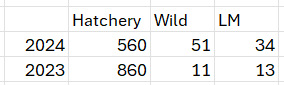
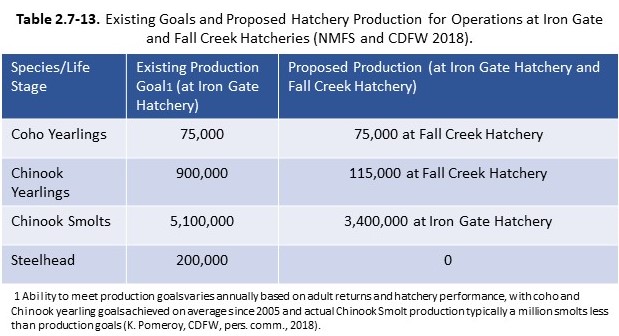
I’m a little late with this post, but it’s now safe to say that the 2024 spring chinook season on the Deschutes has ended. It’s a mixed bag. The table shows fish captured in the Pelton trap below the Pelton Round Butte hydroelectric project that creates Lake Billy Chinook and Lake Simtustus. Spring chinook first arrived at the trap in May and the last one was trapped in September.

Read More »
30th annual Deschutes Fisheries Workshop

Update: I forget to include this presentation on adult returns in the post. You can find them all here.

The annual Deschutes Fisheries Workshop hosted by Portland General Electric and the Confederated Tribe of Warm Springs occurred on July 18th. I have attend approximately the last 15 of these meetings and always appreciate getting the updates. Presentations were made by scientists from a variety of agencies and once again it is clear that the Lower Deschutes is in great shape. Just ignore what the tin foil hat crowd continues to say, as usual they were not in attendance to hear real science. As usual, ODFW’s annual surveys confirm that redband trout are in great shape and there is some good news on the effort to reintroduce steelhead into the Upper Deschutes Basin. Water quality continues to meet the overall targets set for the project, with some minor seasonal variances that are not negatively impacting fish health or abundance. The keynote was a talk from the National Oceanic & Atmospheric Administration which I found information and perplexing. Keep reading for a few highlights.

Read More »

The first spring chinook passed into the Crooked River

The first adult spring chinook passed through the dam at Opal Springs into the Crooked River on May 28. The good news is that Prineville Reservoir is still 98% full and the river below Bowman Dam is at 245 cfs. The low flow in the river just below the City of Prineville is at 47 cfs as I write this. So, there’s adequate water in the river for the chinook. There have also been “schools of smolts” making their way down through Opal Springs dam as they out migrate. This is a much better picture than the recent past when sections of the river had lethally low flows when the chinook were trying to make their way upstream.

2024 Deschutes Fisheries Workshop

I’ve stopped commenting on the constant stream of complete nonsense put out by the Deschutes River Alliance. They continue to repeat the same discredited blather. I guess they are only concerned with raising money to pay staff salaries. If you want to really know what is going on with the anadromous fish reintroduction program and the Lower Deschutes River from scientists whose work is peer reviewed you should attend the next Deschutes Fisheries Workshop on July 18. I have been attending this annual event for well over a decade, have learned an enormous amount, and always enjoy the interactions with scientists from a range of agencies.

2023-2024 steelhead reintroduction final count

UPDATE: According to PGE, in addition to the 134 adult steelhead discussed below, 33 more adult steelhead were also released into Lake Billy Chinook this past season. These are excess hatchery broodstock, not fish that were captured as smolts in the fish capture facility and transported down river. So, the total number of adult steelhead released into Lake Billy Chinook was 167.

Attempts to reintroduce summer steelhead into the Upper Deschutes Basin above the Pelton Round Butte hydroelectric project on the Deschutes River have been ongoing for over a decade. This past season saw 134 returning steelhead adults moved up into Lake Billy Chinook, the largest number so far, where they will hopefully naturally spawn. 134 adult fish is a disappointing number, but it is an increase from last year and much better than most years. Perhaps theย fisheries managers at Portland General Electricย are having some success adapting their management strategies. Improved ocean conditions certainly helped as well.

Read More »

Spring chinook reintroduction status

The Upper Deschutes Basin anadromous fish reintroduction program targets three species: sockeye salmon, summer steelhead, and spring chinook salmon. We are now in the early stages of the 2024 spring chinook run and while they remain well below target, the early counts of adult spring chinook are good compared to past runs. I have been tracking this but not writing about it as the season will extend for many more months and we don’t know how it will end. Unfortunately from my perspective, Central Oregon Daily News recently ran a segment on the early returns which prompted Native Fish Society to post a heated rebuttable. I think CO Daily News and NFS did not do a good job discussing the issue. So, while I was hoping to write about this months from now, here’s what I think is a more a balanced discussion.

Read More »

Happy New Year (almost)

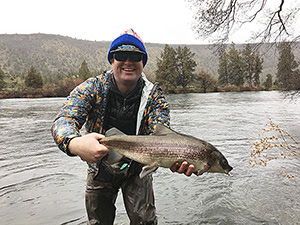
Here’s a ~25″ bull trout that I landed yesterday on the Metolius using a 5wt rod.โ€‚Pretty fun.โ€‚(The fish was never out of the water and vigorously swam away.)โ€‚The cold weather and intermittent rain mixed with snow kept most anglers away which was an added bonus.โ€‚Here are some Opal Springs videos from earlier this month.

Read More »
Upper Deschutes Basin spring chinook 2023 returns

Writing the post I made earlier today reminded me that I have not written about this year’s spring chinook returns to the Upper Deschutes Basin. They remain grim. If this is the sort of reintroduction project that the tribes along the Upper Columbia River want to implement they should expect a long and disappointing effort. They should also expect to spend far more than $200M.

Read More »

$200M for Columbia River salmon

You may have seen the news that last Thursday that the Biden administration pledged $200M for salmon restoration to tribes around the Upper Columbia River. These funds are to help with new hatcheries and a trap and haul operation around Grand Coulee and Chief Joseph dams. Both of these dams are well upriver from where the Snake River meets the Columbia River near Kennewick, Washington. I’m all for reintroducing anadromous fish into their ancestral waters, but this announcement is puzzling to me. There is no way that $200M is enough to “fully fund” reintroduction into the Upper Columbia and the approach being taken has a low probability of success.

Read More »

Grab bag and some cool videos at the end

I’ve been preparing for my next fishing adventure, which starts tomorrow, and have not had the time to post, but as always there has been plenty to write about. So, here are a few short takes on Klamath Dam removal, the impact of ocean heating, our nationwide groundwater “crisis”, and some short videos of fish moving through Opal Springs dam.

Read More »

“Shocking”: fish survey on Whychus Creek

The final Deschutes Fisheries Workshop presentation that I will dive into was a report on fish population in Whychus Creek. It was “shocking” in the words of one fisheries biologist. I agree and had to go over the data again with the presenter to make sure I understood what was being said, which I did yesterday. Here’s the presentation. Keep reading for a discussion of what it says and some background that gives important context.

Read More »

Lower Deschutes River fish population estimates

One of the presentations I look forward to every year at the Deschutes Fisheries Workshop is the ODFW report on their annual fish population estimates. There are many who continue to argue that the operation of the selective water withdrawal tower has been detrimental to redband trout. Once again, the science says otherwise. Redband trout continue to do well. You can see the presentation below, but here’s a summary. Steelhead returns continue to be low. Clearly, this is not due to the SWW, steelhead returns are low throughout the entire Columbia River Basin. Coho salmon returns are increasing. Spring chinook returns are critically low. Fall chinook returns are robust. Smallmouth bass are exploding in the Columbia River and seasonally move up into the Deschutes but they are not spawning in the Deschutes.

Read More »

2022 steelhead smolt survival in the Crooked River

There were many very interesting presentations at the annual Deschutes Fisheries Workshop last week which I will be diving into soon. One of them was on downstream smolt migration and survival in the Crooked River in 2022. Last Wednesday Tim Porter, ODFW Deschutes District Assistant Fish Biologist, gave one of those presentations to Central Oregon Flyfishers where I was able to get many questions answered. In short, the presentation was alarming. Keep reading for the presentation and a discussion.

Read More »

2022-2033 steelhead reintroduction final count

Attempts to reintroduce summer steelhead into the Upper Deschutes Basin above the Pelton Round Butte hydroelectric project on the Deschutes River have been ongoing for over a decade. This past season saw 131 returning adults moved up into Lake Billy Chinook, the largest number so far, where they will hopefully naturally spawn. 131 adult fish remains a disappointing number, but it is two to almost three times the count over the past few years, and it points to the success fisheries managers at Portland General Electric are having adapting their management strategies in the face of the deteriorating outlook for steelhead over much of the west coast of North America.

Read More »

Spring chinook and Crooked River flows

The middle of the Crooked River at 4 cfs just below Prineville on 5.26.2022. The water barely covered my feet.

The Deschutes Valley Water District maintains a spreadsheet that identifies and counts the fish that pass through the ladder at Opal Springs Dam on their way up the Crooked River. It’s pretty interesting to see how many and how many different types of fish use the ladder. I had never even heard of a chiselmouth before seeing thousands of them in the spreadsheet heading up river to spawn in the spring. Anyway, I have been thinking about drought and local river levels and went back to correlate flows with spring chinook returns last summer. It was as bad as I expected.

Read More »

Itโ€™s time for bull trout on Lake Billy Chinook

As readers of this blog know, the pursuit of bull trout using fly fishing gear dramatically changed with the reintroduction of steelhead and spring chinook salmon in the Upper Deschutes Basin.ย  Prior to this, fly anglers would target bull trout chasing kokanee smolts in late winter and early spring as they moved out of the Metolius River.ย (The Metolius arm of LBC opens March 1, be sure to get your tribal permit.)ย  Since reintroduction efforts began, however, salmon and steelhead have been planted in the Crooked and Middle Deschutes Rivers and their tributaries, making those arms of LBC attractive places to fish as well.ย  This year there will be no salmon smolts planted due to insufficient hatchery production.ย  100,000 steelhead smolts will be released, however, half into the Crooked and half into the Deschutes.ย  The first release is scheduled for tomorrow, February 23rd, in a tributary of the Crooked River. There will be 10 releases in total, the last occurring on April 27th.

2022-2023 Deschutes River steelhead return puzzle

We all know that 2021-2022 returns were disastrously low for wild steelhead in the Deschutes and most of the Pacific Northwest.  ODFW estimates that only 523 wild steelhead made it above Sherars Falls, compared to 1,935 the year before.  The current 2022-2023 Deschutes steelhead return year still has a few months to go but surprising data is emerging.  Wild steelhead counts have improved but are still low, barely above the threshold for survivability as established by ODFW.  Upper basin origin reintroduced steelhead, however, are likely to have their best return year ever.  With a few months to go, returns this year are already almost 3 times last year.

Read More »

2022 Columbia River steelhead returns

The Conservation Angler has a good blog post on 2022 Columbia River steelhead returns, which obviously includes all Deschutes River steelhead. You should read the post, but the bottom line is that Columbia Basin steelhead remain in terrible shape. 2022 returns of wild fish were only 30% of the 2001 to 2010 average. While I was certainly tempted, I refrained from fishing for steelhead on the Deschutes this year, remain dumbfounded by people who did, and am disappointed with TCA’s comment that it has been enjoyable to fish for them. Of course, this is an all too common human trait: short term satisfaction at the cost of long term benefit.

28th Annual Deschutes Fisheries Workshop

A spring chinook passing through Opal Springs Dam on 7/26/22 and heading up the Crooked River during a time of extremely low water.

For over a decade I have been attending the annual Fisheries Workshop hosted by Portland General Electric and the Confederated Tribes of Warm Springs, the owners of the Pelton Round Butte Hydroelectric Project.ย  This workshop discusses the efforts to reintroduce anadromous fish above Lake Billy Chinook with presentations by a wide range of scientists, agencies, and NGOs.ย  The last one was on July 14th. I have been waiting to write about it until the materials were online and I had the chance to get through them.

As I have written for years, reintroduction results continue to fall far short of the goals of the project.  Efforts to make improvements continue, however, and I remain hopeful that they will ultimately prove fruitful.  The good news is that trout continue to thrive on the lower Deschutes River.

Read More »

Thinking of steelheading on the Deschutes?

As I wrote 2 weeks ago, steelhead returns to the Deschutes are better than last year but still very low. This post from The Conservation Angler adds more to that discussion and notes that while July returns to the Columbia River were good enough to get ODFW to lift the closure on the Deschutes, since the end of July the returns have plummeted. As of August 10, the steelhead returns are 34% below the last 10-year average. Wild steelhead returns are 45% below. As I have asked many times in this blog, is the thrill of catching one of these fish worth the impact, even with best catch and release practices, when they are barely holding on?

UPDATE: Today ODFW released updated fish counts at Sherars Falls below Maupin on the Deschutes. So far this year a total of 4 steelhead (2 wild and 2 hatchery) have been counted. Last year at this time 12 fish (9 wild and 3 hatchery) had been counted. Again, not all steelhead go up the ladder at the falls, so these numbers are best used as a year to year comparison. Thus far, that comparison is not good.

Lower Deschutes opening to steelhead fishing Aug 15, but…

As expected, yesterday ODFW announced that unmarked summer steelhead counts over Bonneville Dam have surpassed the minimum threshold to open the Lower Deschutes to steelhead fishing on August 15. That is good news, but while the run on the Columbia is “improved”, it is still extremely low and the outlook for Columbia Basin summer steelhead remains dire. So far, counts on the Deschutes at Sherars Falls are worse than last year which saw record low returns. As of July 27 a single steelhead has been counted at that trap, it was a wild fish*. Over the same period last year there were 7 fish, 6 wild and 1 hatchery. It’s also important to know that ODFW believes that every wild fish in the Deschutes is caught at least once. Even using the best catch and release practices there is an estimated 10% mortality rate and reduced fecundity among caught fish. So, be careful out there.

*Not all steelhead go into the fish trap at Sherars Falls. This number is best used as a comparison to other years, not to estimate the total number returning adults. Also note that if 60 or fewer wild steelhead are counted at the trap by October 31 the river will be closed again.

Spring chinook entering the Crooked River

It’s the time of year when spring chinook come into the Deschutes River to spawn. As of yesterday morning, 28 of them have moved through Opal Springs Dam into the Crooked River. Right now there are survivable flows in the Crooked below the North Unit Irrigation District diversion just above Smith Rocks. When the flows out of Bowman Dam are reduced to 10 cfs in August, however, any remaining adults, their eggs, and any fry that have hatched will be in mortal peril.

First spring chinook of the season

On May 23rd the first spring chinook of the season was passed through the Opal Springs fish ladder. I hope there is enough water in the Crooked River for it. Recently, the river has been as low as 12 cfs below the NUID diversion. For most of the past 2 months, the Crooked has been around 2 to 4 cfs below the OID diversion. I took a photo when I walked across the river near the City of Prineville wetlands project when it was at 4 cfs. As you can see, in the deepest spot the water barely went over the top of my feet.

A spring chinook won’t swim through this!

2021-2022 steelhead reintroduction final count

The 2021-2022 Deschutes summer steelhead season officially ended April 30. While steelhead can start appearing in the lower most sections of the Deschutes in June, most donโ€™t arrive at the upper stretches until winter with stragglers arriving in March and April. According to Portland General Electric, the final reintroduction count for this past season is 46 steelhead. (Look at the spreadsheets from May 2021 through April 2022.) The 2020-2021 season saw 52 adult returns and the total for the season prior to that was 57. Clearly, the return of only 46 adult steelhead from the Upper Deschutes Basin is disappointing. On the other hand, the return of wild and hatchery adults in the entire river has been plummeting.

Read More »

Opal Springs Videos

Tomorrow I leave the country for a 10-day “bucket list” fly fishing trip and thought I would leave you with a few brief glimpses of steelhead swimming up the Opal Springs fish ladder. The latest counts are from December 21 through January 10 when 70 fish of all species were detected, including 54 redbands and 4 steelhead. Steelhead returns remain very low, but a few are now in the Crooked River. Flows in the river are well under targets established by the Oregon Department of Fish & Wildlife for healthy habitat, but the river is not dry in places like it was last year when spring chinook arrived. Let’s hope these steelhead find spawning partners and a place to lay their eggs!

Read More »

New Whitefish Record and a Healthy Deschutes

New state record whitefish.

You’ve probably already read about the announcement yesterday from ODFW that a new state record whitefish was caught last month on the Lower Deschutes near Warm Springs. Congrats to Alex Dietz, it must have been fun. This is another example of the fact that the Lower Deschutes is in great shape and that fish are bigger since PGE’s Selective Water Withdrawal tour became operational. To be clear, there are ongoing issues but its past time for the misinformation campaigns to stop.

Prineville, Data Centers, and Water: There is a Cost

The Bend Bulletin recently reported on an aquifer recharge project by the City of Prineville which has received funding from Facebook and Apple, who use significant amounts of water to cool servers at their data centers in Prineville.ย  Hereโ€™s a more complete and balanced explanation of the project and its environmental impacts.ย  Facebook and Apple are trying to reduce their water footprint, but thereโ€™s more to the story than reported.ย 

Read More »

Deschutes Closed to all Steelhead Fishing

Desperate times require desperate measures. ODFW did the right thing yesterday by closing the entire Deschutes River to all steelhead fishing for the rest of the year. They also closed the river below Moody Rapids to all fishing. I think that the entire river should be closed to all fishing, but the section below Moody is the most important, and I am thankful for the actions ODFW has taken. The problem is that there have been widespread reports of (selfish, short-sighted, unethical) anglers targeting steelhead while claiming to be fishing for salmon or trout. Hopefully, that will soon change. See ODFW’s press release below.

Read More »

“The 2021 Columbia and Snake River Crisis”

On September 4th, The Conservation Angler sent this letter to the chairpersons of the Oregon, Washington, and Idaho fish & wildlife/game commissions. The next day I sent the letter below to Shaun Clements, ODFW Deputy Administrator for Fish Division. Both letters advocate for more stringent regulations to protect steelhead this year. The end of the partial closure on steelhead fishing is only a few days away, the outlook for these fish remains dire, and no new protections have been announced. What is the role of these agencies? To protect or oversee the continued decline of these fish?

Read More »

Sherars Falls Steelhead Counts

According to ODFW, as of September 20, a total of 59 steelhead have passed through the Sherars Falls fish ladder. Last year was a very poor return year and the count was 209. We are currently at only 28% of that. As I argued here, the current partial closure of the Lower Deschutes to steelhead fishing is inadequate, and it is now about to expire. I again encourage you to think carefully about targeting these fish anywhere on the Deschutes. Do you really want to be that angler?

It is important to note that only a portion of returning steelhead go through the ladder, many go up the falls. More than 59 have undoubtedly moved past Sherars. Nevertheless, if you thought steelhead were sparse last year, it is much worse this year. The total steelhead run in the entire Columbia Basin remains at the lowest level ever recorded.

Pumping Water from Lake Billy Chinook: Too Many Unknowns

North Unit Irrigation District (NUID) is working on plans to pump up to 400 CFS of water from Lake Billy Chinook (LBC) for use by their patrons.ย  The Bend Bulletin recently had a positive story about it as well as an editorial endorsing the idea. ย This could be an attractive idea but there are simply too many unknowns to have an informed opinion, and there are reasons for concern.ย  The devil is in the details, and we don’t know the details.

My first reaction is that a pumping station at LBC will be another expensive taxpayer funded project for private benefit, may shift water availability and quality issues from one part of the Deschutes River to another, and would not be necessary if the core issues of the water scarcity crisis were addressed.  Water waste and misappropriation is our disease. Do we need to spend another $400M of taxpayer dollars for pumping on top of the $1B dollars already needed for canal piping to cure it?

Read More »

Steelhead Fishing Closure: Too Little Too Late?

By now you should be aware that two days ago ODFW partially closed steelhead fishing on a few rivers, including parts of the Deschutes during September. For the past three years I have been writing that this should occur, and not just for part of the Deschutes for a single month. Here’s a post I made just 3 weeks ago illustrating how “bleak” the returns have been. In their press release on August 27th, ODFW stated that steelhead returns so far this year are the lowest since counts began in 1938. As of August 20, steelhead counts at Sherars Falls on the Deschutes near Maupin were only 1/3 the already low 2020 counts. Above is a graph showing unclipped steelhead returns over Bonneville Dam, fish destined for all the tributaries of the Columbia. Note that unclipped mostly means wild, but not always. Some unclipped fish are actually hatchery fish that are part of steelhead reintroduction efforts, like in the Upper Deschutes Basin. Also note that the 10 year average in the graph is getting pretty low as the last 10 years have seen poor returns.

Read More »

Early, but Bleak: Steelhead Returns

I spent time this morning looking at my calendar and thinking about fishing over the next 2-3 months. The end of August is when I would like to switch over to steelhead fishing on the Deschutes River. So, I took a look at the Fish Passage Center website. These are all the steelhead destined for all the rivers above Bonneville Dam on the Columbia River, not just the Deschutes. Bleak is about the best I can say, even more bleak than last year’s horrible returns. It’s early in the season, but the graphs say it all. I’m not ready to sell all my steelhead gear yet, but this sure is depressing. You need to ask yourself, is the pleasure you get from fishing worth contributing to the continued decline of these fish? Even with the best catch and release practices, some fish are killed.

All steelhead over Bonneville Dam. Data as of 8/7/21.
Read More »

The Endangered Species Act is Not the Problem

A few days ago the Bend Bulletin ran an opinion piece from a local farmer that partially blamed the Endangered Species Act for irrigator water shortages. Below is the response I submitted. Let’s see if they print it.

7/29/21 UPDATE: That was fast, it’s in today’s paper.


The Bulletin recently ran a guest column from a Central Oregon farmer asserting that the Endangered Species Act is partly to blame for current water shortages.  Many local farmers need more water, but the column is written from a perspective that does not hold up to objective analysis.

Read More »

2021 Pelton Round Butte Fisheries Workshop Executive Summary

Portland General Electric and the Confederated Tribes of Warm Springs, co-owners of the Pelton Round Butte Hydroelectric Project on the Deschutes River, held their annual fisheries workshop today. I have been attending these events for many years and can wrap this one up pretty easily. While some of the numbers have changed, the bottom line is that the goal of reintroducing summer steelhead, spring chinook, and sockeye into the Upper Deschutes Basin remains elusive. The number of returning adults of all three species continues to be a small fraction of what is required for self-sustaining populations. That being said, there are good, dedicated people working on the effort and they continue to adapt based on the results of on-going scientific work. Also, the Oregon Department of Fish and Wildlife reported that their annual fish sampling once again shows that the operation of the Selective Water Withdrawal tower has had no negative impact on trout populations in the Lower Deschutes River. As detailed in their presentation, trout density and size continues to be the same or better than before the SWW become operational. In a follow up conversation, ODFW confirmed that trout condition factors (health) also continue to be good. I believe that reintroduction remains a worthwhile effort. The biggest issues remain outside the control of PGE/CTWS: low flows in the Crooked River (where most fish want to go), high temperatures, and poor ocean conditions.

Crooked River at 5 CFS?

Photo: Brett Hodgson. 7/9/2021.

Brett Hodgson, recently retired Deschutes District fish biologist at the Oregon Department of Fish & Wildlife, sent me this photo taken at 8:15 this morning of the Crooked River at Smith Rocks. He estimates the river is at 5 CFS! The air temperature is supposed to reach at least 90 degrees today. You are looking at what will soon be a dead stretch of river, if it is not already. You could walk across it without getting your feet wet.

So much for anadromous fish reintroduction. Over 60 adult spring chinook salmon have gone through the fish ladder at Opal Springs to be faced with this.

And so much for the benefits of taxpayer funded canal piping. Some of that piping was supposed to increase flows in this stretch of the river. In fact, the minimum is supposed to be 10 CFS, which the river is not at, and 10 CFS is not enough to support fish in any event.

More Cold Water Being Released into the Lower Deschutes River

The recent heatwave caused Portland General Electric to release 25% cold bottom water a few days ago into the Lower Deschutes River. The lower river once again has the temperature it would have if the Pelton Round Butte hydroelectric complex was not there. PGE says they will be able to release more cold water in July. Good news for Deschutes anglers.

More Spring Chinook Going Nowhere

Due to irrigation withdrawals, the Crooked River is currently so low as to be impassable around Smith Rocks and the City of Prineville. Once the river reaches the Crooked River Ranch golf course, it is recharged by cold, clean water from a series of springs to the extent that it actually resembles the Metolius River by the time it reaches Lake Billy Chinook. As a result, the bottom stretch of the river has sufficiently high quality water to attract spring chinook through the fish ladder at Opal Springs Dam just upstream from LBC. As of today, 12 chinook have passed through the ladder. That’s the good news. The bad news is that they won’t get far. Let’s hope they can find places to spawn in a very short stretch of water.

Spring Chinook, the Crooked River, and the HCP

Here’s more on the extreme low flows on the Crooked River which is currently at 9 CFS below Prineville. As of yesterday, 3 adult spring chinook have swam through the fish ladder at Opal Springs near the mouth of the Crooked River. They won’t get far, however, as the river is impassable for fish their size not far upstream. Below are a couple of photos of the river a little below the North Unit Irrigation District diversion near Smith Rocks. Why doesn’t the Habitat Conservation Plan require flows needed for these reintroduced fish? Probably because they are not yet listed as endangered species in the Deschutes Basin, but steelhead are, and their fry need higher, cleaner flows to survive.

Read More »

2020-2021 Steelhead Reintroduction Final

Portland General Electric provided the final reintroduction counts for the 2020-2021 steelhead season last Friday* and once again they were extremely disappointing: a total of 52 steelhead. These are fish from the Upper Deschutes Basin that were captured as out migrating smolts 2 years ago at the Selective Water Withdrawal tower in Lake Billy Chinook, potentially marked and released into the Lower Deschutes River, and which subsequently returned as adults. Last year 57 adults returned. It is almost important to know that the number of all steelhead (wild, hatchery, and reintroduced) captured at the Pelton Trap was very low (1,309).

Once again, I make the case that this is not an issue specifically with the Deschutes River, it is a result of many factors that have led to massive declines in anadromous fish populations throughout the Pacific Northwest. These include global warming which is destroying the food chain in the ocean as well as lowering and warming rivers, dams which remove habitat and impede migration, over fishing, pollution, cross-breeding and competition with hatchery fish, etc. Without large scale reform, wild steelhead in much of the Columbia Basin and beyond are on the path to extinction and hatchery fish could follow.

For those of you who track the reintroduction closely, keep reading.

Read More »

Crooked River 2021 Flows

We can now make a prediction about how the Crooked River will look for the remainder of the year.ย  The executive summary is that the Wild & Scenic section below Bowman Dam, where most anglers spend their time, down to the City of Prineville (CoP), will have good flows during irrigation season and will have low, but survivable flows in non-irrigation season.ย  Below CoP is another story.ย  Flows below CoP will be extremely low, lethally so at times, during irrigation season but then improve during non-irrigation season.ย  Read on for a detailed explanation.

Read More »

Attack on Fish Passage Requirements

Yesterday, Ochoco Irrigation District notified the Federal Energy Regulatory Commission that they were surrendering their preliminary permit to install a hydroelectric facility at Bowman Dam.ย  Simultaneously, Prineville Representative Vikki Breese Iverson introduced House Bill 2610 which could eliminate statewide fish passage requirements for many dams.ย  I simply donโ€™t understand this lack of concern for our environment, rivers, fish, and wildlife.ย  Yes, the cost of providing fish passage at Bowman was projected to be high, but so is canal piping which is getting done with little financial contribution from the applicants.ย  Or, the applicants could provide some other net benefit (e.g., habitat restoration, increased flows, pollution reduction) that would mitigate the lack of passage. OID, the City of Prineville, and Crook County are looking for an easy, one-sided solution to the detriment of the long term environmental health of Oregon.

“String of Marine Heatwaves Continues to Dominate Northeast Pacific”

That’s the title of a recent article from NOAA Fisheries. The article speaks for itself. “Itโ€™s notable that in five of the last seven years, the California Current system has been dominated by these large marine heatwaves, which are also the largest heatwaves on record for this area.” And, “these warmer conditions have boosted the odds of harmful algal blooms, shifting distributions of marine life, and changes in the marine food web.” Clearly, the decline of salmon, steelhead, and other anadromous fish is due to both freshwater issues (dams, habitat, hatcheries, etc.) as well as heating oceans. We need to urgently work to improve both freshwater and ocean conditions. Time is running out.

Why are salmon and steelhead on the path to extinction?

The Bend Bulletin recently published an article from the Associated Press titled “Study: Ocean conditions, not dams, reduce salmon runsโ€.ย  This is misleading reporting of the original study, โ€œA synthesis of the coastโ€wide decline in survival of West Coast Chinook Salmonโ€, published in the Fish and Fisheries journal.

The research study argues that the most prized salmon and steelhead populations along the west coast of North America are in decline, often dramatically so, and that the reasons are complex.  Dams are not the sole culprit.  This can be a controversial statement in many environmental circles, but it is true.  It is well known that anadromous fish are declining in river systems that are not impacted by dams as well as where dams are present.  This is not an either-or proposition, however.

Read More »

โ€œDay Tripโ€ Steelhead Update

For Central Oregonians, the โ€œday tripโ€ on the Deschutes is the stretch from Warm Springs to Trout Creek.ย  While steelhead counts on the Columbia are somewhat elevated from last yearโ€™s dismal numbers, it has not translated into good returns on the day trip section so far this season. ย According to fish counts on the PGE website, a total of 186 steelhead have been captured at the trap near the base of the Pelton Reregulating Dam from May through October.ย  Of those, 8 were true wild fish and were returned to the river. 15 of the fish were planted as fry or smolts above Lake Billy Chinook.ย  Most of these will be released into LBC with the hope they will naturally reproduce in the Crooked River or Whychus Creek.ย  The 163 hatchery fish will mostly be used as brood stock for future hatchery production.ย  These are small numbers, but the next three months typically see the most fish arrive.ย  Keep your fingers crossed.

Ochoco Irrigation District Canal Piping Post โ€“ Another Boondoggle?

Ochoco Irrigation District is the latest in Central Oregon to apply for federal funding to upgrade their water distribution system.ย  Details of the proposal as well as information on how to submit comments by September 30th are online.ย  The โ€œDraft Watershed Plan โ€“ Environmental Assessmentโ€ (Draft-EA) is 155 pages long but easy to read.ย  I encourage you to go through the materials yourself and come to your own conclusions, but here are my comments.ย  Like the previous proposals from other local irrigators, itโ€™s a mixed bag.ย  The common belief is that canal piping is good, and in theory I agree, but the devil is always in the details.

Read More »

Lower Deschutes Fish Update

From my perspective, one of the highlights of the Deschutes Fisheries Workshop is the annual report on lower Deschutes fish from ODFW.ย  That presentation did not occur this year, so I talked to Rod French, ODFW Mid-Columbia District Fish Biologist which includes the lower Deschutes.ย  There was a surprise, read on for more.

Read More »

2020 Deschutes Fisheries Workshop Recap

I have looked forward to attending the annual Deschutes Fisheries Workshop for many years.ย  It has been the place to hear the latest, best available science on what is happening in the Deschutes River, some of its tributaries, and anadromous fish reintroduction efforts.ย I found the online event yesterday to be disappointing, however.ย  Part of that is due to the lack interaction with others in the hallway, during a meal, or at the bar.ย  The organizers are not to blame for that, they have no control over the pandemic, but they could have provided a lot more content.ย  Hereโ€™s my summary and criticism of the 26th annual meeting

Read More »

Wonky: Bowman Dam / Crooked River Water Accounting

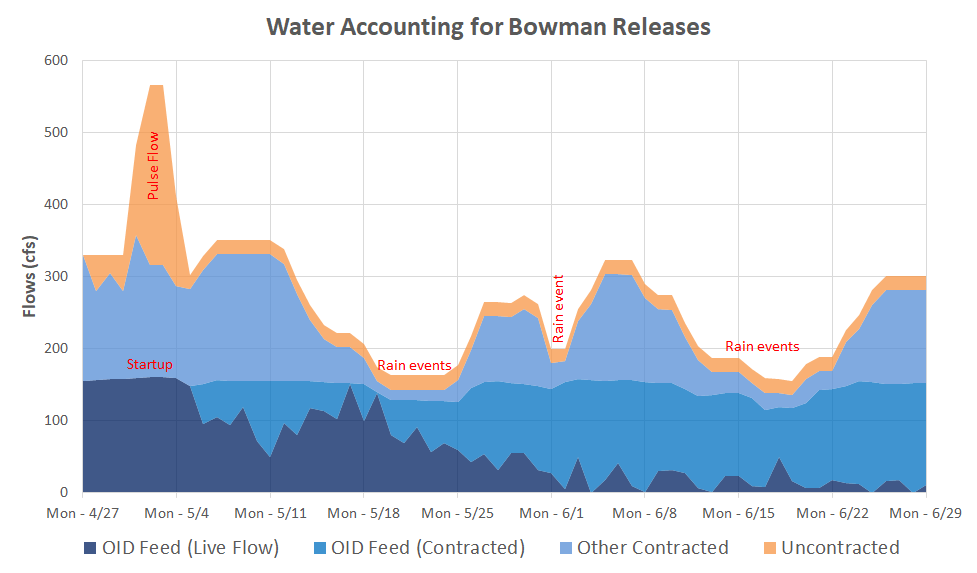
I’m on the email list that discusses water releases from Bowman Dam into the Crooked River. You can get more details by reading prior posts on the topic (see the Crooked River section), but the executive summary is that the water is supposed to be released for irrigators as well as the “maximum benefit” of fish. How that actually occurs is the subject of constant discussion. The latest email contained the graphic above that really illustrates the operation well.

Read More »

Klamath Dams: Progress or Setback?

Four dams are slated to be removed on the Klamath River, re-establishing hundreds of miles of habitat to anadromous fish. The long-negotiated plan was to transfer ownership of the dams from PacificCorp to the Klamath River Renewal Corporation (KRRC), a non-profit formed exclusively to oversee removal. Yesterday, the Federal Energy Regulatory Commission (FERC) approved transfer of ownership but with the stipulation that PacificCorp remain a co-licensee. I listened to the FERC meeting, read their ruling, and was enthused by FERC’s desire to have the dams removed. I also understand their caution to ensure sufficient funding is available to complete removal once started.

Read More »

2020 Deschutes Fisheries Workshop

This year’s workshop is being held online on July 23rd. Before COVID these workshops were 1.5 days and filled with great information. I have been going for years and always learn from them. This year will be much shorter but still the place to get the latest info on anadromous fish reintroduction efforts. See the agenda and sign up here.

My Email to ODFW Opposing the Fish Passage Waiver

For what it’s worth, here’s the email I sent to ODFW yesterday:

I oppose providing a fish passage waiver for the proposed hydroelectric plant at the base of Bowman Dam. While the cost of installing a ladder may be prohibitive, the proposed mitigation measures do not come close to providing a greater benefit to fish than opening up 500 miles of habitat and reconnecting fish in the upper Crooked River with fish in the lower Crooked River as well as other upper Deschutes Basin waterways. Further, a 50-year FERC license would preclude passage for the same amount of time.Read More »

Fish Passage Waiver at Bowman Dam? Not so fast.

Bowman Dam

Bowman Dam was completed by the US Bureau of Reclamation (BoR) in 1961, damming the Crooked River and creating Prineville reservoir.ย  It was built to protect development downstream from flooding, including the City of Prineville, and to provide water for Ochoco Irrigation District (OID) who operates the dam.ย  While these are worthy goals, Bowman Dam has also caused significant environmental damage.ย  OID, Prineville, and Crook County would now like to add a small hydroelectric facility to the base of Bowman Dam and are asking for a waiver to the State of Oregon requirement that fish passage be provided at dams undergoing significant changes.ย  This is a complex issue, below are my thoughts.ย  The waiver application, supporting documents, and analysis by the Oregon Department of Fish & Wildlife can be found here.ย  Public comment on the waiver application is being accepted until June 22nd.Read More »

2019-2020 Steelhead Season Reintroduction Final Count

“We have met the enemy, and he is us”. – Pogo

Adult steelhead start arriving in the Upper Deschutes during the summer and continue through the following April.  (Steelhead are amazing.)  Today, Portland General Electric released their April adult fish count for the Pelton Trap near the bottom of the re-regulating dam.  A total of 57 adult steelhead returned during the 2019-2020 season.  22 of them were released as fry into the upper basin and 35 were released as smolts.  There’s no denying that 10 years in, this is a disappointment.Read More »

Not a Pretty Picture

5.18.20 SNOTEL

Here’s the latest snow pack info for Oregon.ย  Pretty grim.ย  Last weekend I did a driving tour of the Cascade Lakes and saw just how low the lakes are for spring. Here’s a photo of the Deschutes arm of Wickiup from two days ago.ย  It’s not just a river yet, but it will be by the end of the summer.Read More »

Opal Springs Fish Ladder Update

The fish ladder at Opal Springs has proven remarkably successful.ย  Since it became operational late November through the end of April, thousands of fish from a variety of species have been filmed and identified as moving through it.ย  Suckers and whitefish have moved up from Lake Billy Chinook for spawning.ย  Rainbow, brown, and bull trout have traveled upriver most likely foraging for food.ย  While the primary motivation for installing the fish ladder was to facilitate the reintroduction of salmon and steelhead, the ladder has also provided much needed connectivity between the Crooked, Metolius, and Middle Deschutes rivers.ย  An improved ecosystem will be the result.ย  Below is the breakdown by species.Read More »

Conservation Hatchery on the Klamath River?

We’re practicing social distancing at our house, so last weekend I got the garage organized and caught up on some reading.ย  A couple of weeks ago The Native Fish society sent out an email that neatly encapsulates both my respect and frustration with them.ย  I agree completely that we should be doing everything possible to support wild fish in our rivers and streams.ย  There is no scientific doubt that wild fish are superior to hatchery fish and that large scale planting of hatchery fish for harvest into waters that contain wild fish should be stopped.ย  This is not a purely black and white issue, however, as was stated in research that NFS themselves referred to.ย  Hatcheries can have a role to play outside of simply stocking ponds and lakes for put and take fishing.Read More »

Upper Basin Steelhead Return Update

Believe it or not, if you look at the individual fish count numbers on the PGE website for past years, summer steelhead season in the upper most stretches of the Deschutes extends to the end of April.ย  Some of these fish really take their time to get to their final destination.ย  So, while the return season is not over, we are getting close.ย  As of March 6th, 53 steelhead have been passed above the dams into Lake Billy Chinook.ย  47 of those were recently counted via radio tags, 22 in the Crooked River, and 3 in the Crooked arm of Lake Billy Chinook, presumably getting ready to head up the river.ย  This once again shows the importance of the fish ladder at Opal Springs.

Klamath River Dam Removal Controversy

The excellent fishing in the Klamath Basin should get even better when 4 impassable dams on the Klamath River in California and Oregon are removed (J.C. Boyle, Copco 1 & 2, and Irongate).ย  Dam removal will improve conditions for resident redband trout as well as allow for reintroduction of anadromous fish into their prime historical spawning habitat in the rivers and streams above Klamath Lake.ย  On Thursday I was at a Klamath Lake Land Trust event where I was able to speak with Dave Meurer of the Klamath River Renewal Corporation, the organization that will soon own the dams and be charged with their removal.Read More »